Why Tourists Still Travel to War Zones and High-Risk Destinations
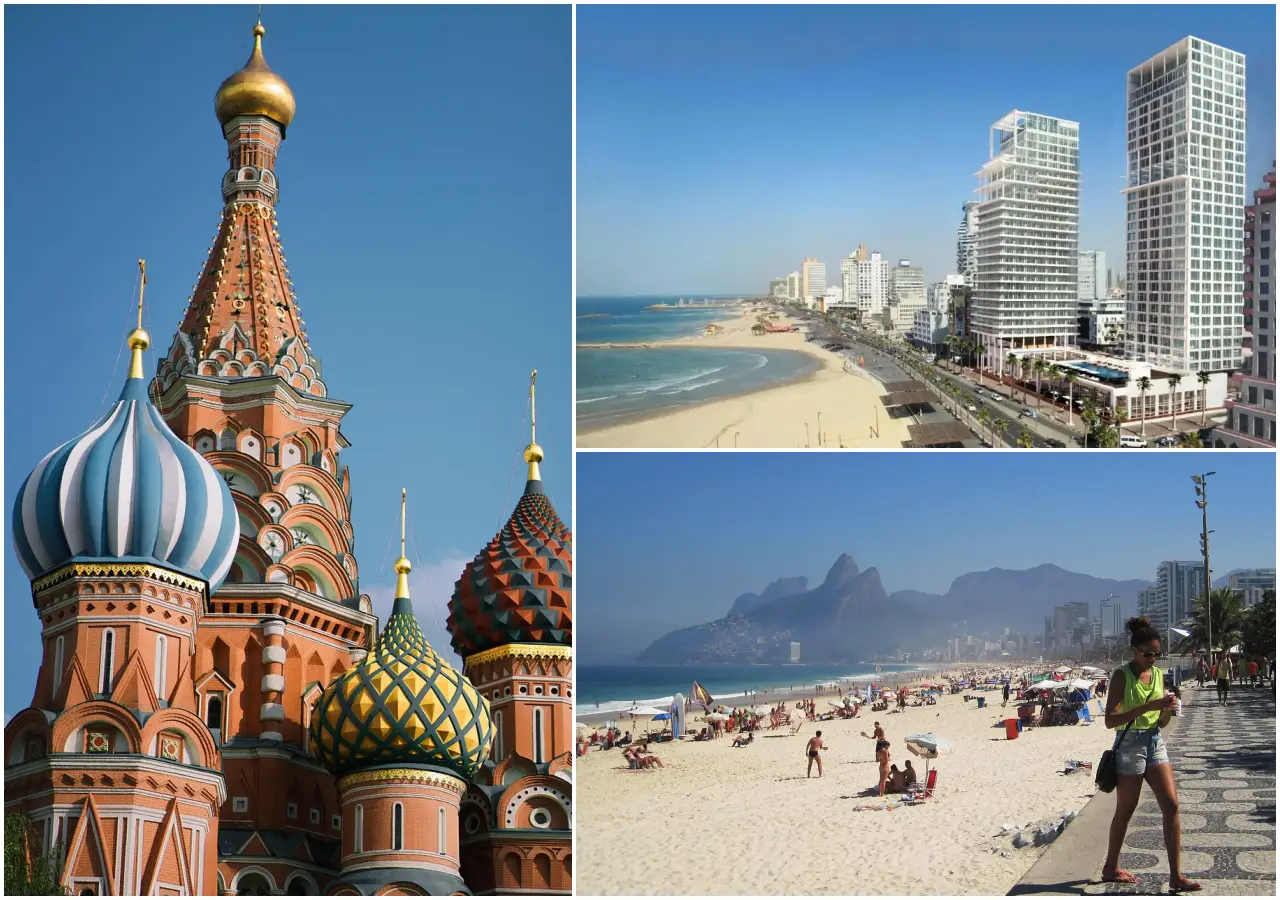
Just a few years ago, Moscow and Tel Aviv ranked among the world’s most visited urban destinations, attracting millions for their history, culture, and vibrant nightlife.
Russia, before the large-scale invasion of Ukraine, welcomed 25 million foreign tourists annually. Now, that number has dropped by 96%, a stark reminder of how swiftly geopolitical events can alter a country’s tourism fortunes.
Israel’s government presents a different narrative, reporting only a 64% decline in visitors. Yet, statistics reveal an underlying shift. The number of “long-term visitors” staying over a year doubled to 28,400 in 2024, many settling there amid ongoing conflict.
Similarly, visitors staying at least a month have risen, often on tourist visas used for professional purposes such as volunteering, journalism, or humanitarian work. More than half come from countries with large Jewish communities—the United States, France, and the United Kingdom—driven by family ties or cultural affinity.
Perception Versus Reality
Perception plays a significant role in determining whether a destination remains attractive despite unrest. In some cases, conflict does not deter tourism if travellers lack first-hand accounts of negative experiences. Rio de Janeiro is a notable example: known for its beauty and danger alike, it continues to draw thousands of visitors each year. Other countries, such as Mexico and Colombia, also maintain steady tourism despite high rates of violence.
Conversely, isolated conflicts in otherwise stable regions can quickly make headlines and deter visitors. The recent skirmishes along the Thailand–Cambodia border affected tourism from Spain, one of Thailand’s top three visitor markets. Similarly, destinations like Morocco, Tunisia, or Jordan, though not at war, often face negative perceptions in the West. According to tourism and conflict expert Maximiliano Korstanje, such views are rooted in stereotypes—particularly the false association between Islam and terrorism—creating disproportionate fear compared to similar incidents in Western countries.
The Psychology Behind Risk Tourism
While many avoid unstable areas, a niche form of travel—high-risk or conflict tourism—has emerged. This appeals to those seeking a deeper, more unfiltered understanding of the world. Photographer Pedro Mir has spent 25 years visiting “regions relegated by traditional tourist circuits,” including North Korea, South Sudan, and Ethiopia. For him, travelling to conflict or post-conflict countries offers a more human and less superficial perspective, allowing him to witness how life reorganises after chaos.
Specialist tour operators have tapped into this demand. The phenomenon made headlines in May 2024 when four tourists, including three Spaniards, were killed in Afghanistan. UK-based Lupine Travel had previously operated tours there, suspending them for six months before resuming. They have since paused trips to Sudan and the Democratic Republic of Congo. Robert Kyle Molina of Lupine Travel emphasises that their goal is not to exploit conflict zones but to provide ethical access to culturally and historically significant places that are otherwise difficult to reach.
Motivations for Visiting Dangerous Places
For Professor Korstanje, the decision to visit conflict areas has deep psychological roots. He likens it to an “exorcism” where travellers confront their own mortality through the suffering of others. This intense personal engagement offers a transformative, if unsettling, travel experience.
Government policies also shape how such destinations are perceived and promoted. Some choose to erase painful histories—Austria demolished Hitler’s birthplace—while others integrate them into tourism, as Colombia does with Pablo Escobar’s former home. These choices determine whether sites of trauma become cautionary tales or tourist attractions.
Degrees of Risk
Not all visits to places marked by violence carry the same level of danger. The 9/11 Memorial in New York is now one of the city’s most visited sites, drawing tourists from around the world. In contrast, certain parts of Mexico lure uninformed visitors into cartel-controlled territories, where the risks are severe and deaths occur each year. As Korstanje notes, the guiding principle for many high-risk travellers is the desire “to be there and feel it in person.”
Balancing Curiosity and Caution
The persistence of tourism in conflict zones underscores the complex interplay between perception, identity, and human curiosity. For some, travel is an act of solidarity with a place or its people. For others, it is about testing personal limits and gaining rare insights. While high-risk tourism remains a niche, it challenges conventional ideas about why and where people travel.
Ultimately, whether driven by cultural ties, psychological exploration, or the allure of danger, travellers to unstable regions navigate a delicate balance between curiosity and caution. In a world where images and narratives of conflict are instantly accessible, the choice to step into those realities firsthand reveals as much about the traveller as it does about the destination.
link