Why Cruising The Northwest Passage Is An Ultimate Adventure

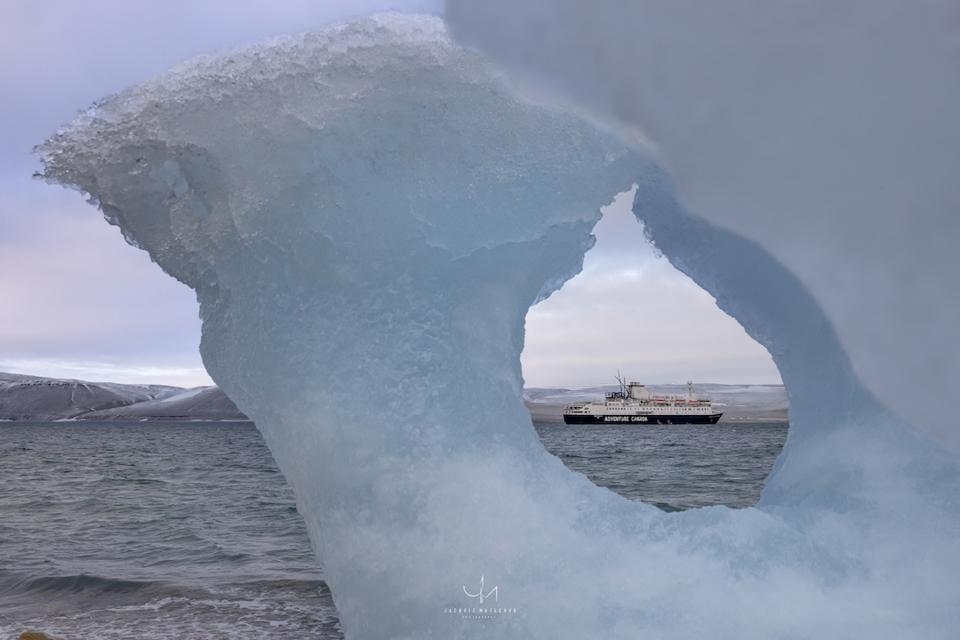
An Adventure Canada expedition cruise ship navigates the Northwest Passage.
Jacquie Matechuk, Adventure Canada
The Northwest Passage is a route brimming with history, intrigue, and challenge. Spanning 900 miles from Baffin Island all the way to the Beaufort Sea, it weaves through an archipelago of some 36,000 islands and shifting sea ice above the Arctic Circle. It’s so remote and difficult to navigate that the Passage wasn’t fully crossed until 1906, when Roald Amundsen first established it. Since then, reports Boat International, more people have stood on the summit of Everest than have traversed the Northwest Passage by sea.
The full passage is only free enough from sea ice to sail for a four-to-six-week window starting in mid-August. And even in that window, ice and weather can be unpredictable. Accurate sea and ocean floor charts still don’t exist in some of the remote spots up here. The Canadian Arctic is home to polar bears, the biggest land-based predator in existence. And thirty to forty different permits—for each passenger—are required between the different communal, regional, and federal departments with jurisdiction along the route.
All of this is what makes an expedition through the Northwest Passage a once-in-lifetime adventure. It’s also why taking that journey with an experienced expedition cruise ship operator is almost the only way to do it—so much so that people who normally wouldn’t vacation aboard a traditional cruise ship will take an expedition cruise to see the Northwest Passage.
Still on the fence? Here’s are a few reasons to take an expedition cruise through this remote and dramatic part of the world.
Rich Culture — Experienced Sensitively
This reason is specific to Adventure Canada, and what makes this company a standout among the expedition operators in the region.
Most expedition cruises through the Northwest Passage will launch from the west coast of Greenland to head through the Canadian Arctic. Both regions are home to communities of Greenlandic and Canadian Inuit. And where most operators tend to employ one Inuit cultural educator per Greenland and Canada permit requirements, says Wayne Broomfield, a cultural educator with Adventure Canada from Labrador, Adventure Canada’s expedition crew often includes more than a dozen.
Backlash against cruise ship tourism in hotspot destinations has dominated recent headlines. The descending of tourists en masse in a few-hour blitz often feels voyeuristic and transactional on both the parts of community members and passengers, and often many sectors of those over-visited communities don’t see much financial benefit from it. Inuit towns in the Arctic (logistically difficult to travel to unless you’re on a cruise ship) are no exception.
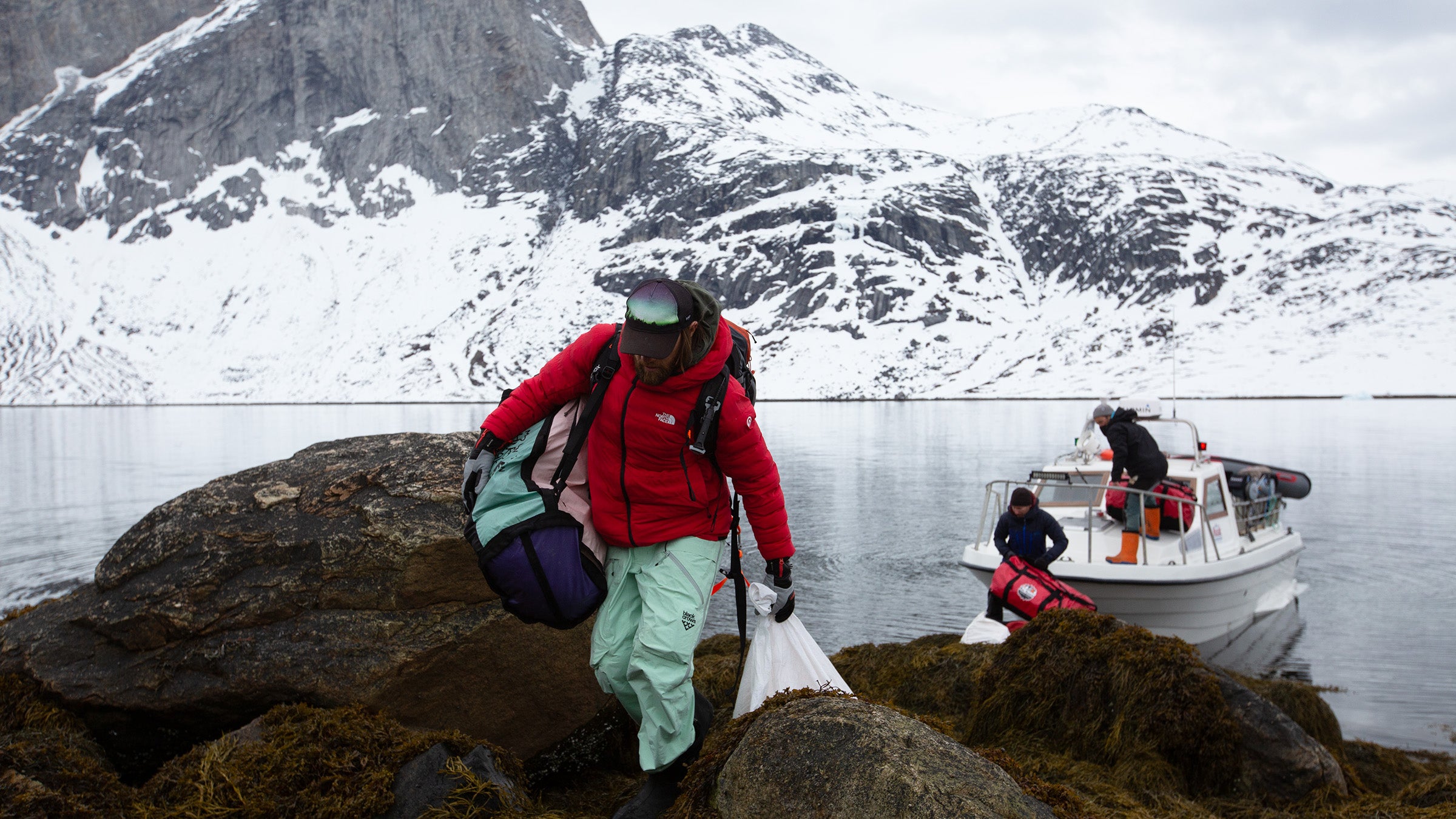
From the beginning of a voyage, before even landing in a community, Adventure Canada cultural educators help passengers prepare for and process community visits, both the harmful and good aspects. They give presentations ranging from mythology and art to how to harvest marine mammals for subsistence, lead hikes while telling stories, and sit down with any passengers who want to talk.
Ancient Thule Site Near Resolute Bay, Nunavut, Canadian Arctic. (Photo by Education Images/Universal Images Group via Getty Images)
Universal Images Group via Getty Images
It’s essentially a floating version of spending the quality time at a destination that usually results in more rewarding cultural immersion—and a welcome model in an era where the need for more sustainable cultural interactions is increasingly entering the travel discourse.
History
For over four hundred years, European and American explorers tried to find a commercially viable Northwest or Northeast Passage through the Arctic to East Asia. Many failed, with sea ice blocking ships’ progress or freezing them in place. Few are more infamous than the 1845 British Expedition of Sir John Franklin. After the crew’s last letters were sent home from the coast of Greenland, Franklin’s two ships, the Erebus and the Terror, were last sighted by whalers off Baffin Island. And then both ships just vanished, along with all one hundred and twenty souls aboard.
Lady Jane Franklin pressured the British Admiralty to send several expeditions to search for them. They turned up only three lonely graves on Beechey Island and then, some years later, an ominous note in a pile of rocks that several men had died, including Franklin himself, and the rest were heading south. They were never found. By 1854, Britain declared all men from the expedition to be deceased.
A Northwest Passage trip, weather and sea ice permitting, often includes a stop on Beechey Island, where the graves and their markers still remain.
Gravesites from the 1845 Franklin Expedition on Beechey Island, part of the history along the Northwest Passage.
Jacquie Matechuk, Adventure Canada
Adventure
An expedition-style cruise is far different from a traditional cruise. Volatile weather and changing sea ice means that no itineraries are set in stone. Expedition crews are often leading Zodiac cruises or landing for hiking excursions in places none of them have ever been before, giving an exceptionally adventurous feel to outings. And because this is polar bear territory, advance crews of bear guards armed with flares and rifles scout the area first, and serve as advance watches on hikes. Polar bear tracks show up in the sand on beaches, sometimes closely followed by Arctic fox tracks.
And it’s not just tracks to be viewed. A Northwest Passage trip is likely to offer up at least one polar bear sighting (although it can range from zero sightings to a dozen or more). There’s little that compares with the opportunity to watch the most massive predator on land amble across a slope, sit on the sea ice poised to dive for a seal hunt, or hop from ice floe to ice floe.
A polar bear patrols the shores in the Canadian Arctic on the Northwest Passage.
Jacquie Matechuk, Adventure Canada
The Takeaway
For travelers looking for a once-in-a-lifetime expedition full of adventure, history, and culture, a Northwest Passage trip should be high on the list. Even for those who don’t consider themselves “cruise ship” travelers.
link