This Is Your Last Chance To Get Your Passport Stamped
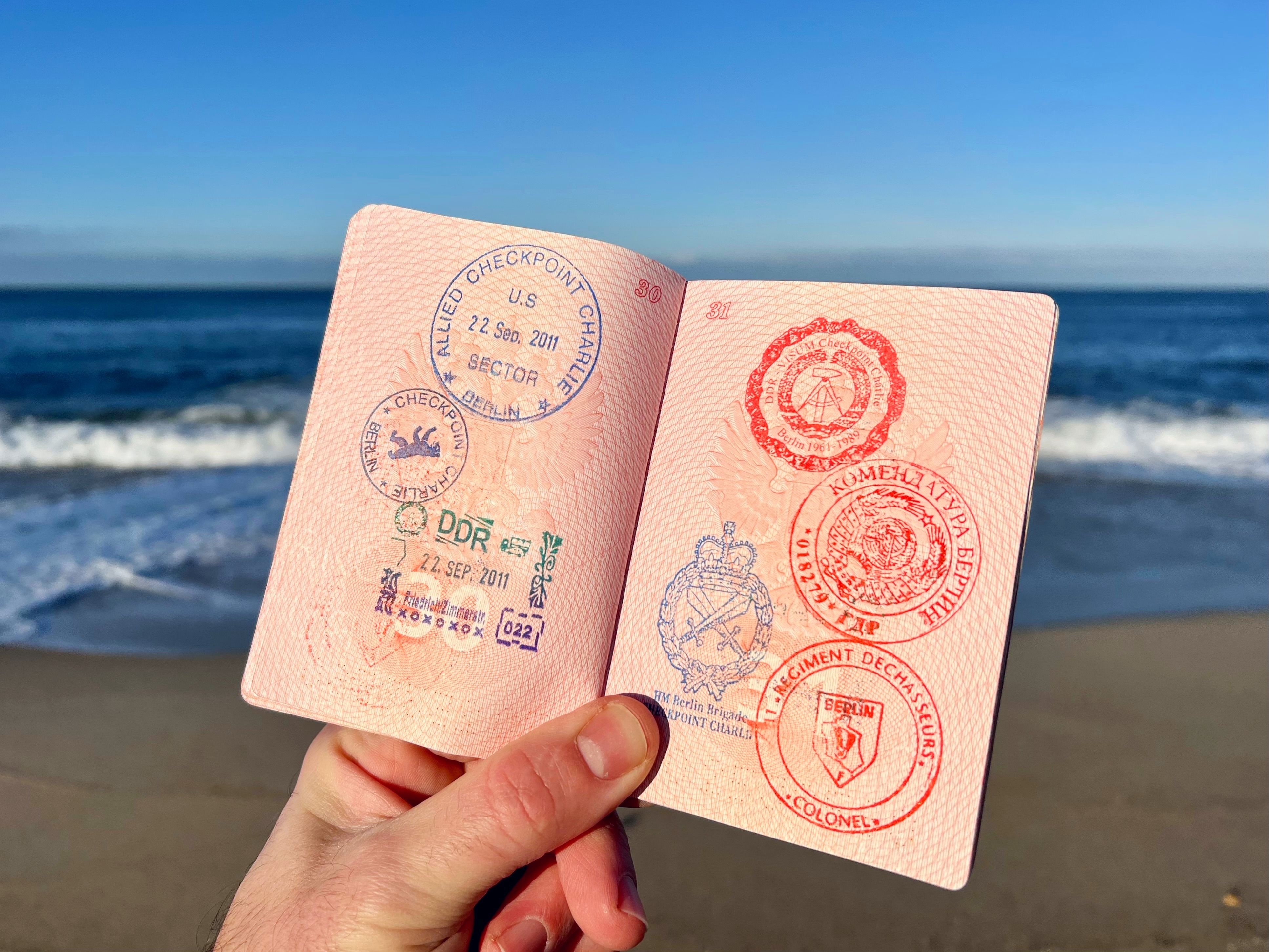
Those once-treasured passports, like a booklet of stamps, might be a relic in the coming years. As the world slowly evolves into a digital age, travel stories might become about lining up to get to the biometric corridors, where facial recognition and eye scans are the gateways to crossing the pond. Yes, “digital passports” might be a thing for all countries and this might be your last chance to get your passport stamped…manually.
The new digital age has reached the circles of many countries, and some have even started doing digital scanning among passengers. Interestingly, the new Google Wallet feature even makes your passport digital, although it won’t work everywhere.
Still, it’s a baby step for most countries as we travel deeper into the digital age. However, for most travelers, particularly those who consider stamps souvenirs, this would be a hard pill to swallow. You could almost hear yourself with big sighs. Because really… we love the stamps, right?
But also, the digital age is such an influence, and everyone is going with the flow. On the plus side, going digital has a few good things. It does save a lot of time as long lines are thinning, and things run smoothly as if we were never tied to the passport stamp legacy. Today, borders are becoming more about presence and less about paper. How does digital access give new life to passports?
Passport Stamps Are Slowly Vanishing Today

USA Passports
Bad news. You’ll lose your “souvenirs” to the new high-tech passport border control. Good news. Your journey will be more efficient, secure, and no more long lines. For those who treat their passport stamps as badges of honor, the transition to all-digital stuff at airports isn’t for everyone because it’s like a travel diary.
It’s an experience that you could keep as a souvenir of your trip to different places, where local cultures are unique to yours. Passports do hold a charm that the digital world can’t even replicate. It’s nostalgic as you flip through the pages of your dog-eared booklet with stamps as if they’re reminders of how you transcended or crossed borders. For many travelers, passport stamps are personal.
Today, although not all countries are ready for the transition, many are already starting to ditch passport stamps. In 2007, Australia was the first country to try self-scanning passport stations, and by 2012, it had completely removed the usual passport stamps. However, travelers who need to get their passport stamps as travel evidence can ask an officer at the border security. Australia also uses SmartGate, a digital system that features facial recognition, fingerprints, and other biometrics stored in your passport.
Recently, India has tested its newest e-passport, complete with an electronic chip and antenna. Although India is still stamping passports, the e-passport launch could be the gateway to the transition. The United States, in 2022, has also eliminated passport stamps upon entry or exit for all its citizens and even for visitors from certain countries. All records are stored electronically.
Hong Kong and Macau provide landing slips instead of passport stamps, while Singapore uses an electronic Visit Pass sent to a traveler’s email. Argentina has also removed passport stamps, and has transitioned to digital entry receipts or QR Codes, although you can still have a stamp on request.
And, the European Union, not too late to the first party, is also slated to launch a large-scale digital Entry/Exit System (EES) later this year. France, Spain, Italy, and other famous destinations in the Schengen area will also ditch passport stamps, and will replace them with biometrics and automated tracking. However, Cyprus and Ireland are still ready for the transition and will continue to stamp passports as of now.
The Benefits Of Ditching Passport Stamps For Biometrics

Air travellers pass through automated passport border control e-gates at Heathrow Airport. Heathrow and Britain’s Border Force use facial recognition technology
We are now more of a security-focused world that relies on high technology, allowing governments and authorities to ensure safety protocols and border control at airports. Our passports are the symbol of adventure and sovereignty, but we are losing the iconic stamps, too. These days, silent algorithms and digital access are a huge help to the increasingly connected world. Although passport stamping has not completely vanished, it will… in due time. However, the benefits of more paperless airport access are considered efficient.
- Upgraded security. Iris, fingerprints, facial recognitions and other biometric data are stored digitally in airports, leaving hackers and thieves scratching their heads. It’s more secure as it’s difficult to forge or copy. It can also detect any malicious or suspicious activities and stolen identities across borders.
- Faster and more efficient border crossings. Manual processes, human error, and long lines are some of the major reasons for long wait times. But with technology, crossing borders would be faster, as there are already automated e-gates at many airports, allowing travelers to get past the immigration even faster.
- Smooth integration. All your health records, such as vaccinations, travel history, and visas are also stored in one digital encrypted profile. This also expedites check-ins and customs disclosures.
- Lower risk of loss or damaged documents. Every traveler’s digital identity has an encrypted backup, which keeps you from worrying about losing or damaging your documents while abroad.
In due time, you might miss the literal memento of passport stamps and even visas during your travels, but digital records are more streamlined and seamless for every traveler.
History Of Passports
You have every reason why you should have a passport, even if you don’t travel internationally, especially since it’s a viable form of your identification. One of the earliest passport origins can be dated back to the Persian Empire, approximately 450 BC, found in the Book of Nehemiah, when Nehemiah, the governor of Persian Judea, asked King Artaxerxes I of Persia for permission to travel to Judea.
The king granted his request and gave a letter asking all governors to give him safe passage. The Holy Roman Empire also played a role in passports, when the Imperial Diet of Augsburg required the people to carry “imperial” documents for travel.
The term “passport” was first used in 1540, when the Privy Council of England started issuing travel documents in England. A somewhat modern version of British passports was attributed to King Henry V of England.
Some sources also claim that the term “passport” could be of Italian origin, when the medieval Italian states required a document to allow passage to a person through the physical harbor, passa porto, “to pass the harbor,” or gate, passa porte, “to pass the gates.” Over time, passports evolved, adapting to every development of each country.
From Royal letters to facial recognition, passports, for most travelers, are less of a document and more of a “souvenir,” which might vanish in the near future. So, yes, go ahead and book that flight you’ve been dreaming of and get your passport stamped as this might be your last chance to keep it as a souvenir!
link