Best Ski Backpacks of 2025

It’s that time of year! Time to find the perfect present for our adventurous loved ones. For that person in your life who loves all things cold weather, check out our gift guide for skiers and snowboarders. For ideas tailored to other pursuits, we also have more editor-recommended gift guides to explore. Happy gift giving!
Whether you’re headed to the resort or gearing up for a big backcountry outing, a pack is useful for carrying your essentials: extra layers, water, snacks, and—if you’re going out of bounds—avalanche equipment. Unique design features that set ski backpacks apart include dedicated pockets for goggles and avy gear, multiple access points, and external ski or snowboard carry straps. Below are our top ski backpacks for the 2025 season, including options for day touring and resort skiing, larger designs for ski mountaineering missions, and packs equipped with airbags. We took these on long days skiing on glaciated peaks in Patagonia and on many, many laps at the resort. After hundreds of chairlift laps and tens of thousands of human-powered vertical feet, our top choice is the Black Diamond Dawn Patrol 32 because of its versatility, craftsmanship, and overall design. For more information, see our ski backpack comparison table and buying advice below the picks. We’ve also compiled a list of the best avalanche airbag packs for those willing to spend up for the boost in safety.
Editor’s note: We updated our ski packs guide on November 16, 2025, to add the Gregory Verte 18 to the list. We also swept the guide to ensure accuracy and removed any discontinued models. Lastly, we added a list of dismissed models below our favorite picks, explaining why they don’t quite make the cut.
Our Team’s Ski Backpack Picks
Best Overall Ski Backpack
1. Black Diamond Dawn Patrol 32 ($220)

Category: Day touring
Capacities: 15, 25, 32L
Weight: 2 lb. 10.3 oz.
What we like: A refined feature set that leaves nothing lacking.
What we don’t: Black Diamond packs aren’t always top-notch quality (although we’ve been impressed by their ski lineup).
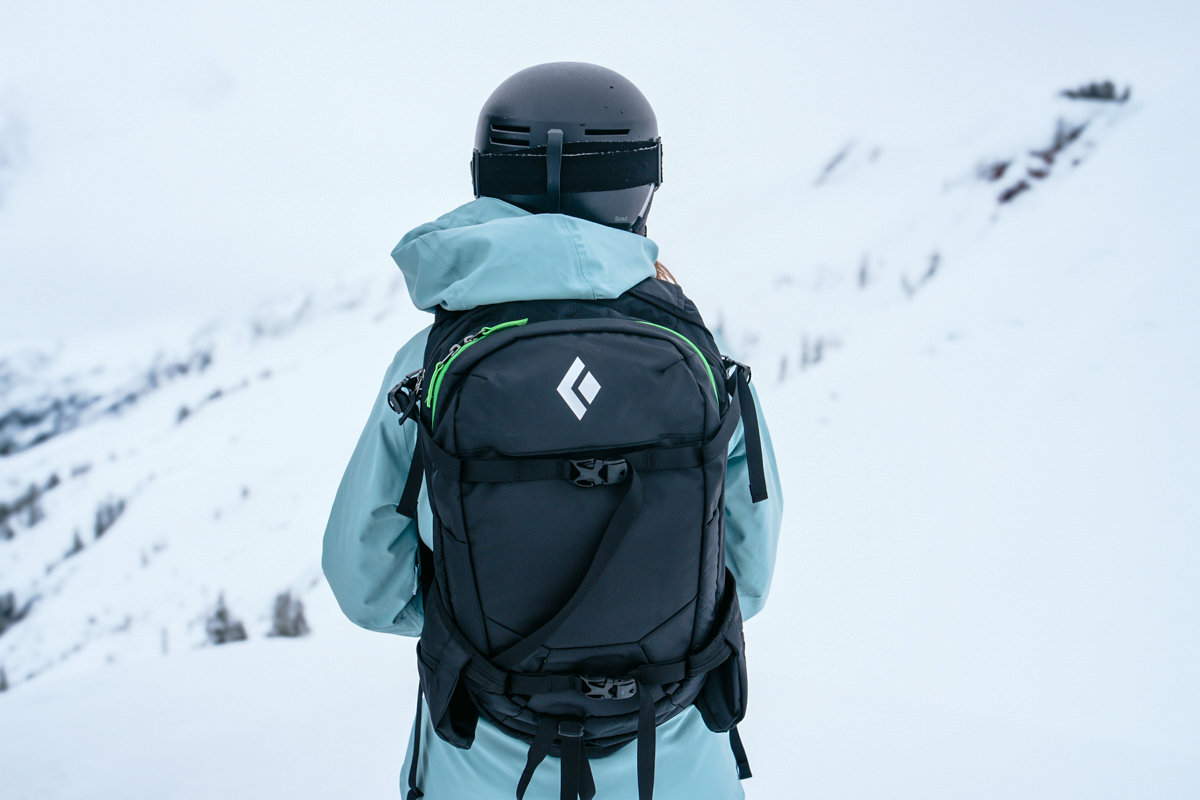
Black Diamond has become a big player in backcountry ski gear, and the Dawn Patrol 32 is their jack-of-all-trades touring pack. Updated a couple of seasons back, it boasts all the bells and whistles we look for in a well-featured design, including zippered backpanel access, external helmet and ice tool attachments, extra-large hipbelt pockets, and a dedicated avy tool compartment. You also get an insulated shoulder pocket for electronics or hydration—a nice detail that few ski-specific packs include and crucial for cold-weather reservoir use—and a metal hipbelt buckle that’s far more durable than most plastic designs. The net result is great versatility for all types of ski missions, from transition-heavy tours to schlepping big loads into the mountains.
The Dawn Patrol holds its own in other metrics, too: Comfort-wise, we appreciate the extra padding on the backpanel, which isolates your body from the inevitable bulges of ski gear inside. Materials are decently durable as well (including burly 840D nylon reinforcements), and the Dawn Patrol has straps for both ski and snowboard carry. We’ll admit that we’ve found Black Diamond packs to be hit or miss in terms of durability, but their ski lineup stands out with thoughtful designs and great build quality (we also include their Cirque and JetForce packs below). The Dawn Patrol also comes in a resort-ready 15L and versatile 25L, but the 32L here is the best capacity for most day tours, whether you’re hiking laps in the sidecountry or venturing deeper into the mountains.
See the Black Diamond Dawn Patrol 32
Best Budget Ski Backpack
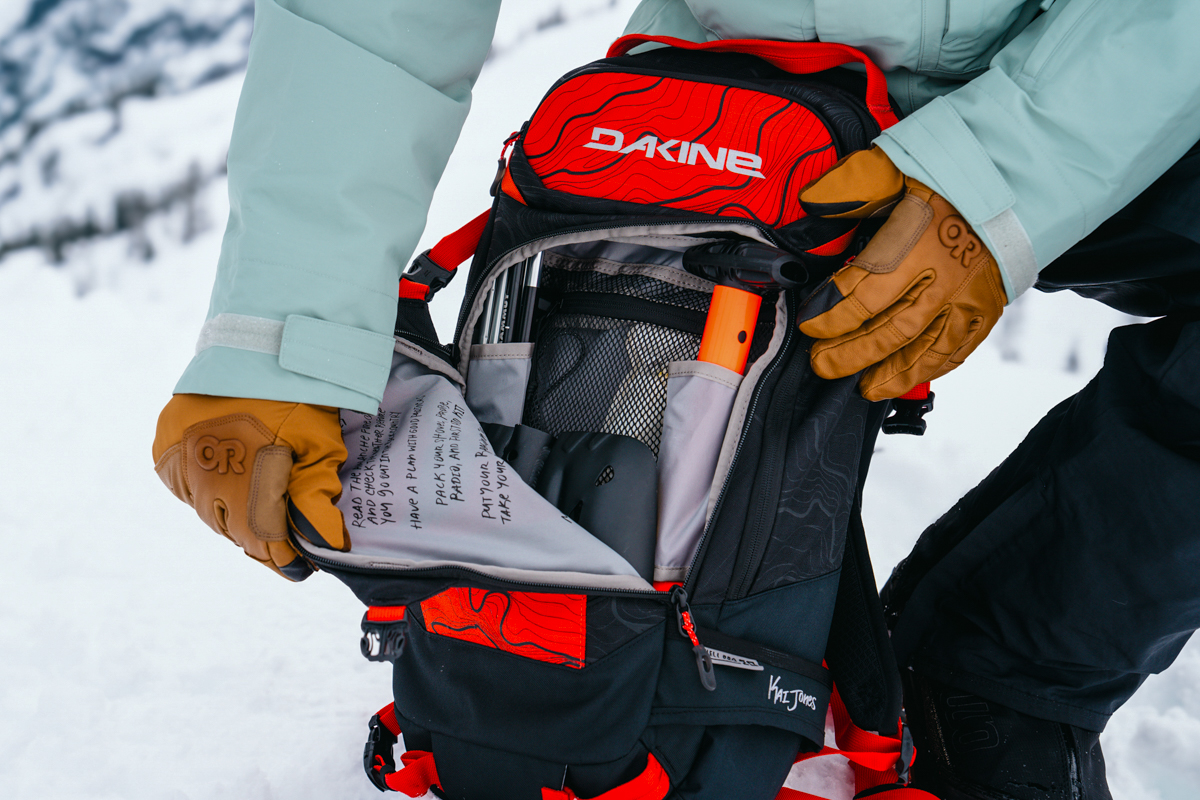
2. Dakine Heli Pro 20L ($144)
Category: Resort/day touring
Capacities: 20, 24L
Weight: 1 lb. 14.2 oz.
What we like: Streamlined and affordable design for inbounds and sidecountry use.
What we don’t: Small and build quality can’t match that of Osprey or Deuter.
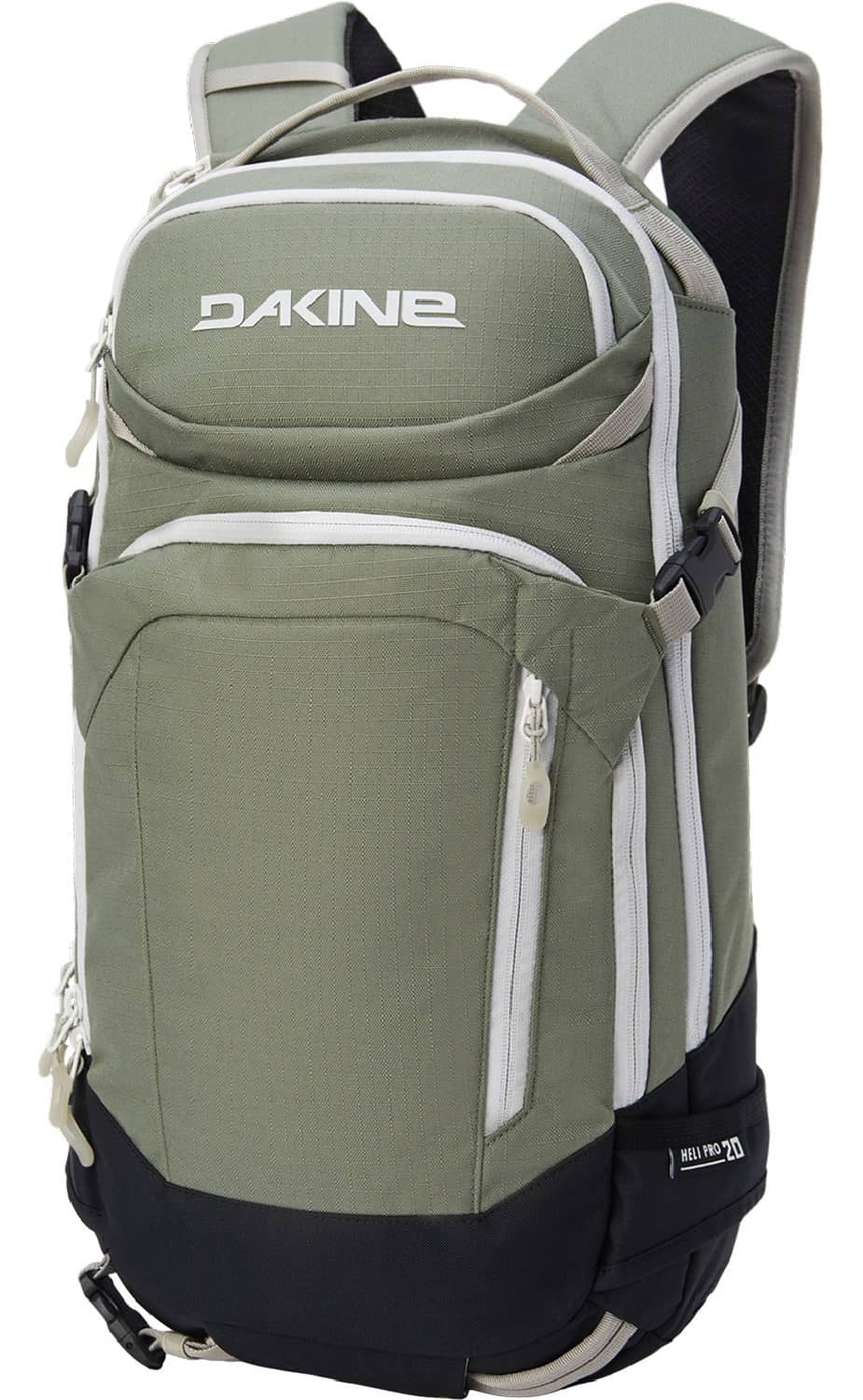
Dakine is a familiar name in the winter sports world, and their Heli Pro series has been a favorite among skiers and snowboarders for years. For resort skiers, aspiring backcountry enthusiasts, and those on a budget, the Heli Pro 20L checks all the boxes for an in-bounds/day-touring pack in an affordable $144 package. Similar to the Dawn Patrol above, the Heli Pro features a dedicated snow safety gear pocket and hydration sleeve and tacks on a fleece-lined goggle pocket (the Dawn Patrol has a compartment for smaller items, but the fleece is a nice touch). The bladder sleeve also doubles as a compartment for Dakine’s Impact Spine Protector, which you can purchase separately for added assurance in the event of a fall. Made with snowboarders in mind, the Heli Pro offers vertical and horizontal board carry in addition to diagonal and A-frame ski carry options.
What do you sacrifice by going cheaper? For starters, Dakine’s build quality simply doesn’t measure up to that of dedicated backpack brands like Osprey and Deuter. It doesn’t have a DWR coating, so you’ll either want to forgo this pack on super wet days or give it a supplemental treatment with a product like Nikwax. The 20-liter capacity is also too minimal for most non-lift-assisted backcountry adventures, and the basic webbing hipbelt is another downside for long-distance comfort. The Heli Pro is also available in a 24-liter version for $168 if you’d prefer a bit more capacity, zippered backpanel access, a deployable helmet carry, and an exterior quick-stash pocket. Either way, both sizes are perfectly serviceable for resort days and short slackcountry outings, and they pack in an extra dose of style, too.
Read more: Dakine Heli Pro 20L review
See the Dakine Heli Pro 20L See the Women’s Dakine Heli Pro 20L
Best Resort Skiing Backpack
3. Gregory Verte 18

Category: Resort/Day touring
Capacities: 12, 18L
Weight: 2 lb. 2.2 oz.
What we like: Great for the resort, not a bad option for touring.
What we don’t: Not big enough for serious tours, ski mountaineering, or snow camping.
With the expansive size of modern ski resorts, skiing with a backpack has become increasingly popular. If you want to stay hydrated, fueled up, and have layers and lenses for whatever Mother Nature throws at you, keeping supplies with you is a lot better than heading to the lodge or back to the car. We’ve found that the Gregory Verte 18 provides the Goldilocks volume where it’s big enough to carry a decent amount of supplies, but isn’t so bulky that it’s a nuisance in the lift line, on the chairlift, or in a sardine-packed tram. The Verte has a few slick features and elements of the design that are ideal for skiing: It has a side zipper for accessing the main compartment on the chairlift, the waistband is elasticized like a ski goggle strap, and if you decide to go for that sidecountry stroll, it has straps for carrying skis or a snowboard. It’s also DWR-treated to keep your belongings dry, and the backpanel is specifically designed to shed snow.
While the Verte 18 is perfect for resorts or a quick backcountry jaunt, we wouldn’t recommend using this pack for outings much more serious than that. It has a pocket for a shovel and a probe, but that’s about it for touring features other than the aforementioned ski/snowboard straps. 18 liters doesn’t leave much room for skins and other gear for a big day either—there are no exterior anchor points, and it doesn’t have an airbag or the option to add an airbag system. On the other end of use cases, if 18 liters sounds like it might be too much for you, Gregory offers the Verte in a 12-liter version as well. We’d also like to see some hip pockets on the Verte; something that neither size option has.
See the Gregory Verte 18

Best Avalanche Airbag Pack
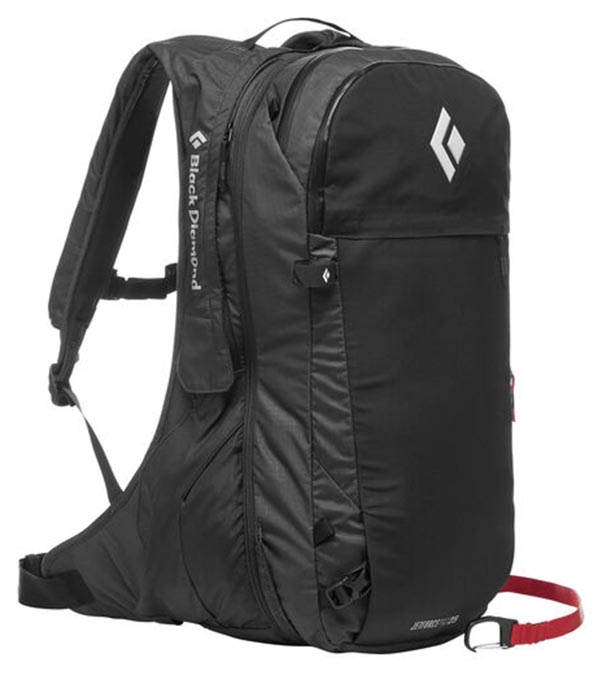
4. Black Diamond JetForce Pro 25L ($1,500)
 Category: Airbag
Capacities: 10, 25, 35L
Weight: 6 lb. 7 oz.
What we like: The most cutting-edge electric airbag available; modular design allows for multiple capacities.
What we don’t: Very expensive and not as simple as a canister-powered system.
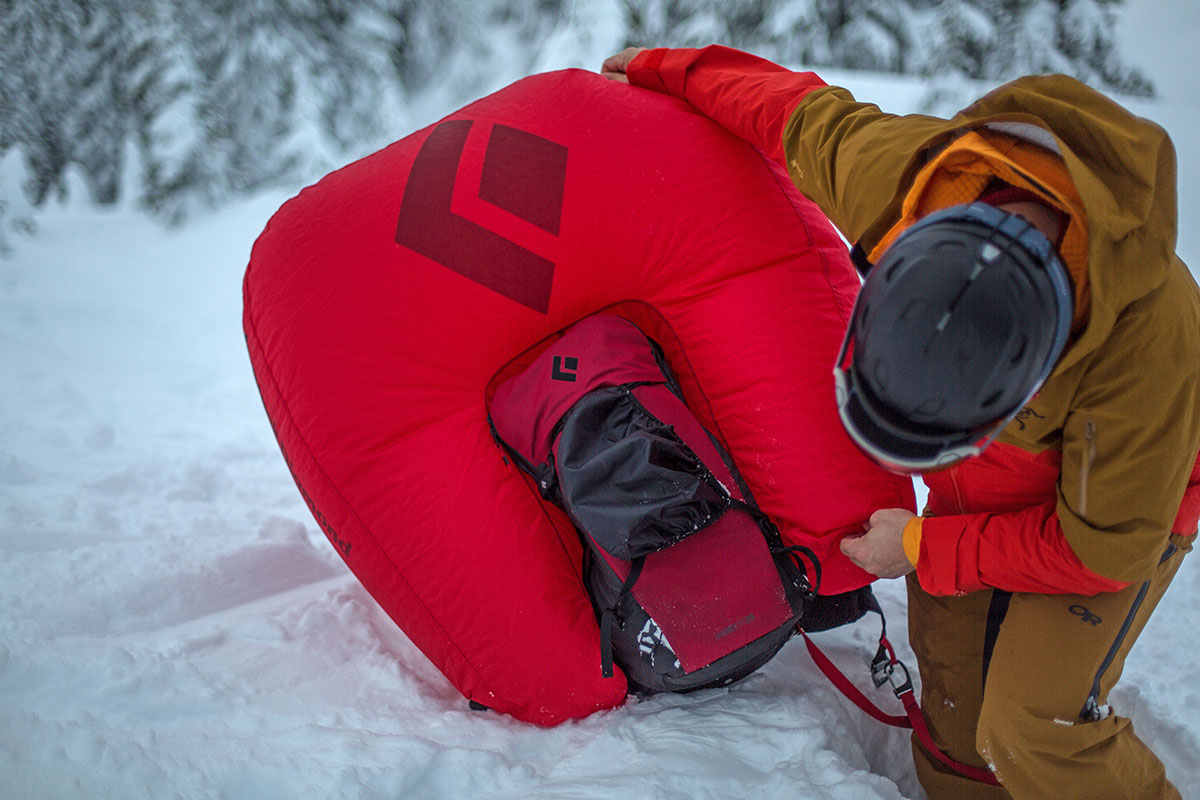
There are ski backpacks, and then there are airbag-equipped ski backpacks. In short, an airbag is deployed in the event of a slide and helps you stay on the surface of the snow as it moves down the mountain. While certainly not a substitute for proper education, good judgment, and avalanche rescue gear (including a beacon, shovel, and probe), there’s growing evidence that airbags have a notable impact on avalanche survival rates. For the 2025 season, Black Diamond’s top-of-the-line JetForce Pro is our favorite all-around design, featuring a proprietary battery-powered airbag that’s exceptionally lightweight and easy to recharge. Further, with its modular system (“boosters” can be purchased separately in 10, 25, and 35L sizes, as well as a 25L splitboard version), you can get just-right carrying capacity no matter if you’re skiing the sidecountry or on a multi-day tour.
Compared to canister airbags, an electric airbag is more convenient and doesn’t require you to refill your canister each time you pull the trigger (great for practice deployment). The fan also continues to spin once the airbag is deployed, keeping it inflated even if punctured by a rock or tree, and it’s suitable for air travel (compressed air/gas canisters are not permitted on airplanes). And with added Bluetooth capability, the JetForce Pro allows you to run diagnostic tests, update software, and customize settings, which is quite simply next level. You can learn more in our dedicated avalanche airbag pack round-up, where we describe the key differences between airbag types and uses. Note: Pieps and Black Diamond recently parted ways, so Black Diamond’s avalanche transceivers and avalanche backpacks will be re-branded to Pieps in the near future.
Read more: Black Diamond JetForce Pro 25L review
See the Black Diamond JetForce Pro 25L
Best Ski Pack for Women or Short Torsos
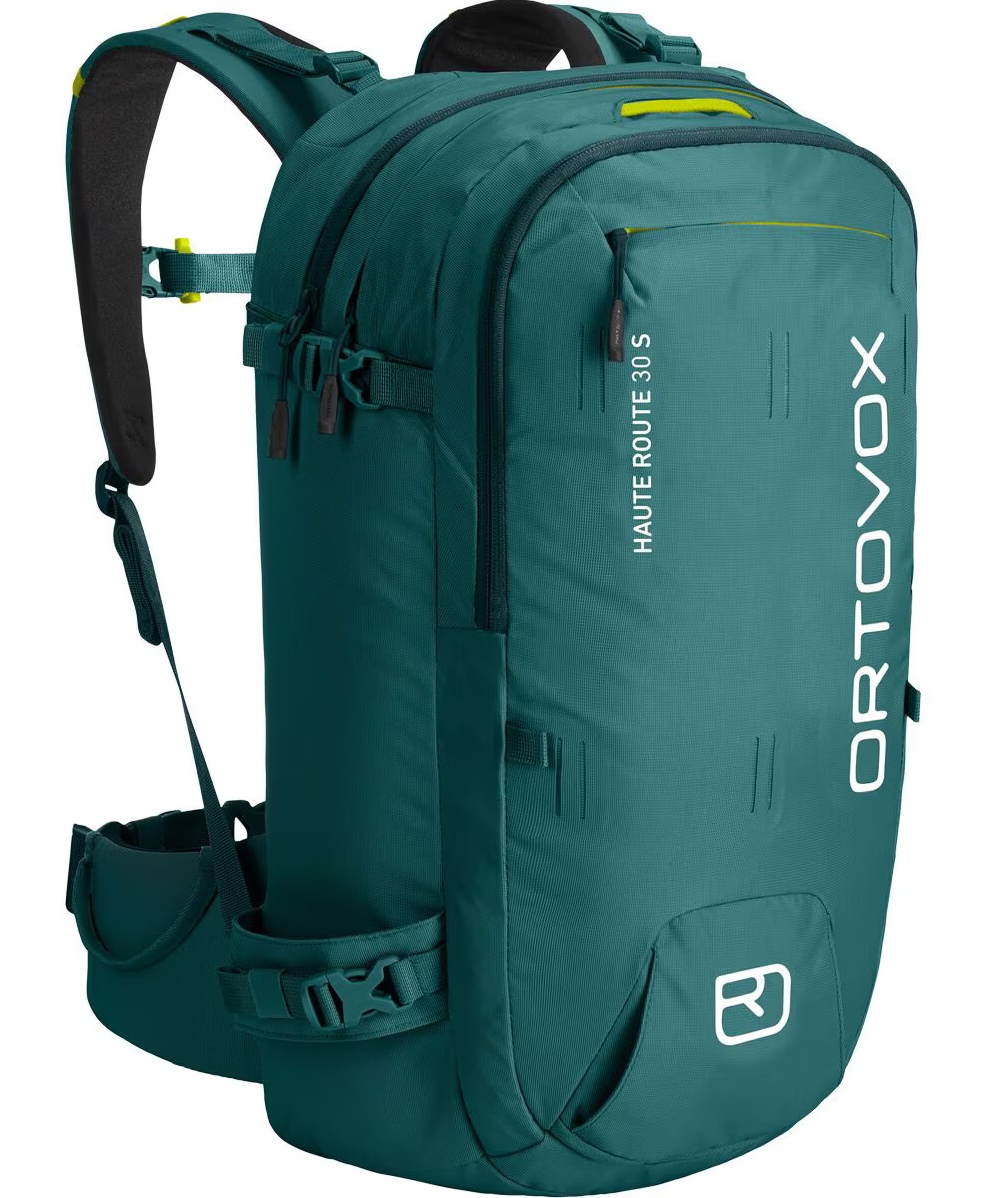
5. Ortovox Haute Route 30 S ($210)
 Category: Day touring
Capacities: 30, 38L
Weight: 2 lb. 14.6 oz.
What we like: One of the most comfortable fits for shorter torsos with an exceptionally functional and durable design.
What we don’t: A bit on the heavier side.
Ortovox is known for not compromising on finding the best materials for their high-end designs, and the Haute Route is no exception. This remarkably comfortable design has optimized load-lifters for shorter-framed people, O-Flex-2 backpanel cushioning, and is made out of Cordura and PFC-free double-layered Polyamide 420D Oxford that has this editor dumbfounded. Known for being tough on ski packs, after skiing with this pack for two seasons straight in all types of conditions, this product still does not need a single patch, only bearing some minor scuffs. The red-zippered avalanche gear pocket keeps your avy tools easily accessible but out of the way of everything else you need for a day on the hill—the latter you can easily access via the best backpanel entry system on the market in terms of ease of use and being able to view what’s inside the backpack. While intended for day touring, the larger 38-liter size with rope and crampon attachments makes this pack a viable companion for shorter overnight ski mountaineering missions as well.
While we could wax poetic about the pluses of this gem of a pack, we should remind you that the perfect ski pack for women or smaller-framed individuals does not exist (yet). The Haute Route is highly functional and thoughtfully designed, but the pack is almost 3 pounds (6 oz. heavier than the comparable women’s Deuter Freescape Lite 24 SL below, though the Deuter has fewer features and a slightly less comfy fit). This being said, since the Ortovox isn’t advertised as a ski mountaineering pack—though it works well as one in a pinch—this weight difference is easy to dismiss in the interest of fit, comfort, and well-designed functionality.
See the Ortovox Haute Route 30 S
Best Ski Mountaineering Pack
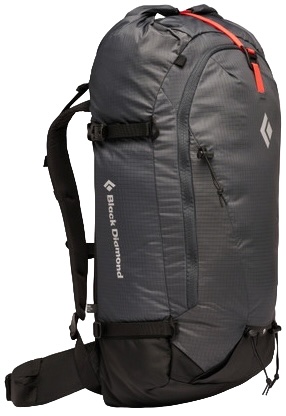
6. Black Diamond Cirque 50 ($280)
 Category: Ski mountaineering
Capacities: 25, 35, 50L
Weight: 3 lb. 0.3 oz.
What we like: A streamlined pack that sports all the necessary features for big missions.
What we don’t: Heavier than the outgoing model; A-frame carry system prevents max-loading.
Ski mountaineering objectives often require big mileage days and an assortment of technical gear. For that, you’ll need a pack that can carry everything you need without weighing you down, and the Black Diamond Cirque fits the bill nicely. The Cirque includes all the necessary trimmings for technical missions, including two easily deployable ice-axe loops, diagonal or A-frame ski-carry straps, and a stowable helmet carry. The most recent update to this flagship pack includes a roll-top main compartment, a zippered easy-access avalanche safety compartment at the front of the pack (for reference, the avy pocket in the previous version was located inside the main compartment), and two new sizes: 25- and 50-liters.
The newest iteration of the Cirque addresses a few of the issues we had with the previous model—such as adding load lifters for a more personalized fit—but we have some concerns with this revision. For instance, the top load strap still doubles as a diagonal ski carry strap, which we found inconvenient when trying to max out the capacity in the old model. This 50-liter version is also significantly heavier (by 10.9 oz.) than the previous 45-liter. For a lighter alternative, the Hyperlite Headwall below boasts an additional 5 liters of capacity and undercuts the Cirque 50’s weight by over 6 ounces, though it comes with a steeper $449 price tag. Nonetheless, we’re excited to give the newest Cirque a try on some multi-day ski tours and spring mountaineering objectives, and we’ll be sure to update this review when we do. Note: The Cirque 50 pack is low on stock at the time of publishing, but we’re confident it will be restocked in the coming months.
See the Black Diamond Cirque 50
Our Other Favorite Ski Backpacks
A Simple Pack With Backcountry Bells and Whistles
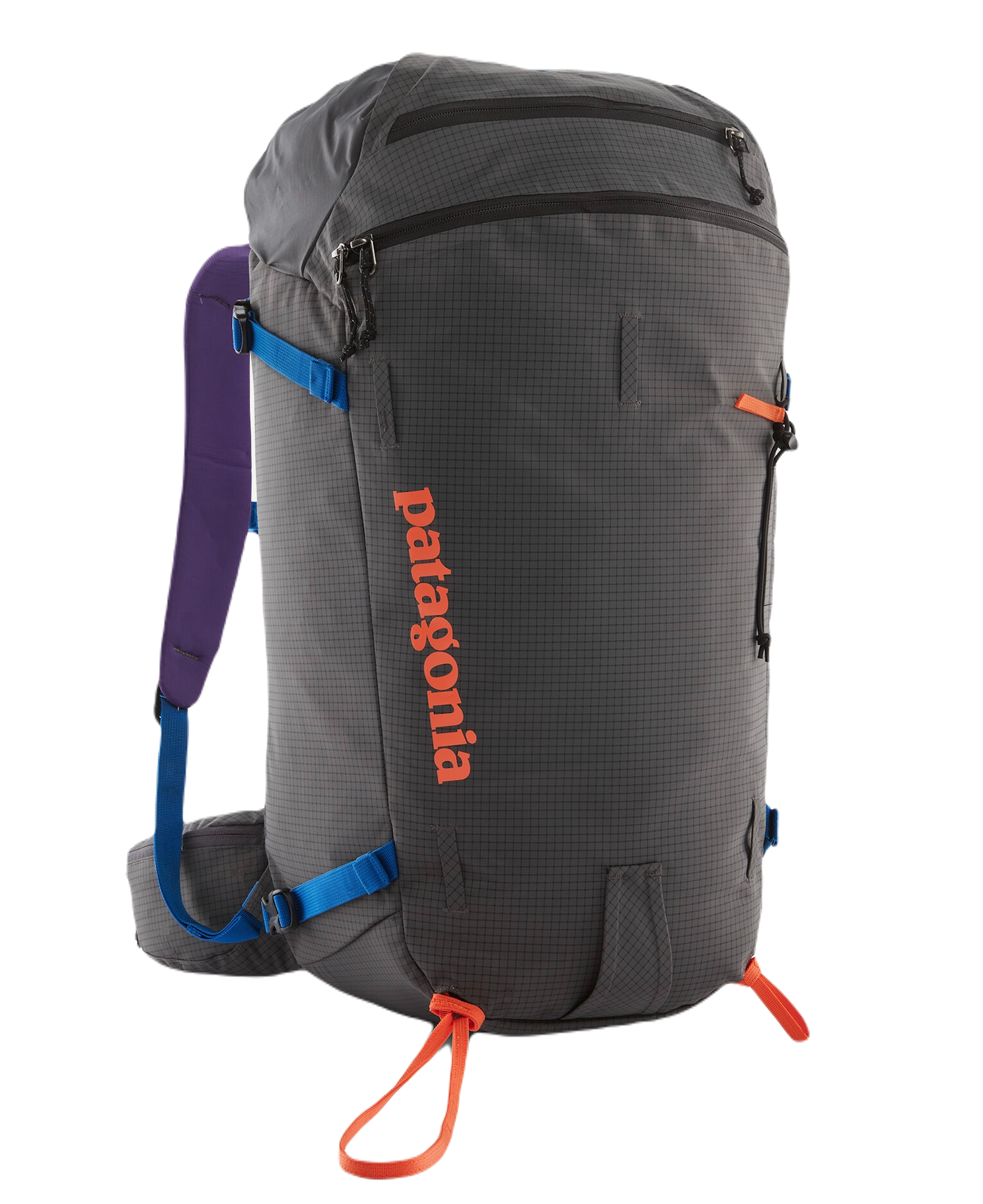
7. Patagonia Descensionist 37L ($279)
 Category: Ski mountaineering/day touring
Capacity: 37L
Weight: 3 lb. 4 oz.
What we like: A durable, simple design that is time-tested.
What we don’t: Not the lightest weight option.
Patagonia’s Descensionist ski pack has been a fan-favorite among backcountry skiers for years, thanks to its trustworthiness and can-do attitude. The latest 37-liter version continues that legacy with a well-thought-out feature set and streamlined build, making it one of our top picks for technical mountain missions. This pack is fully prepared to haul whatever you need into the backcountry, be that ice tools, a rope, or a pair of skis or splitboard via A-frame or diagonal carry. Additional storage includes a dedicated avalanche tool pocket, a goggle pocket, and a helmet carry, and we’d be remiss not to mention the side access zipper, which allows you to dig into the main pocket without undoing the top cinch. The Descensionist is also one of the more hard-wearing packs on this list, and we can attest to the abrasion-resistant outer shell, which has so far held up well to ski edges and rowdy descents.
Unlike many modern ski backpacks, the Descensionist doesn’t suffer from “feature-itis”: It has all the features you need and nothing you don’t. That said, we do have a few nitpicks with the design, particularly the avy tool pocket. Its horizontal zipper makes quick access difficult, especially when trying to grab a shovel or probe in a hurry (we prefer a pocket that can be fully opened). And despite its minimalist appeal, the Descensionist 37L tips the scale at over 3 pounds—4 ounces more than the larger Cirque 50 above. Still, if you’re not overly concerned about weight, the Descensionist remains a versatile and dependable companion for big mountain objectives. One final plus: our female ski editor (5’2″) found the small size to be a particularly comfortable fit, a rare win for women who often find unisex packs uncomfortable.
Read more: Patagonia Descensionist 40L (previous version)
See the Patagonia Descensionist 37L
Ditch the Airbag on Days When it Isn’t Needed
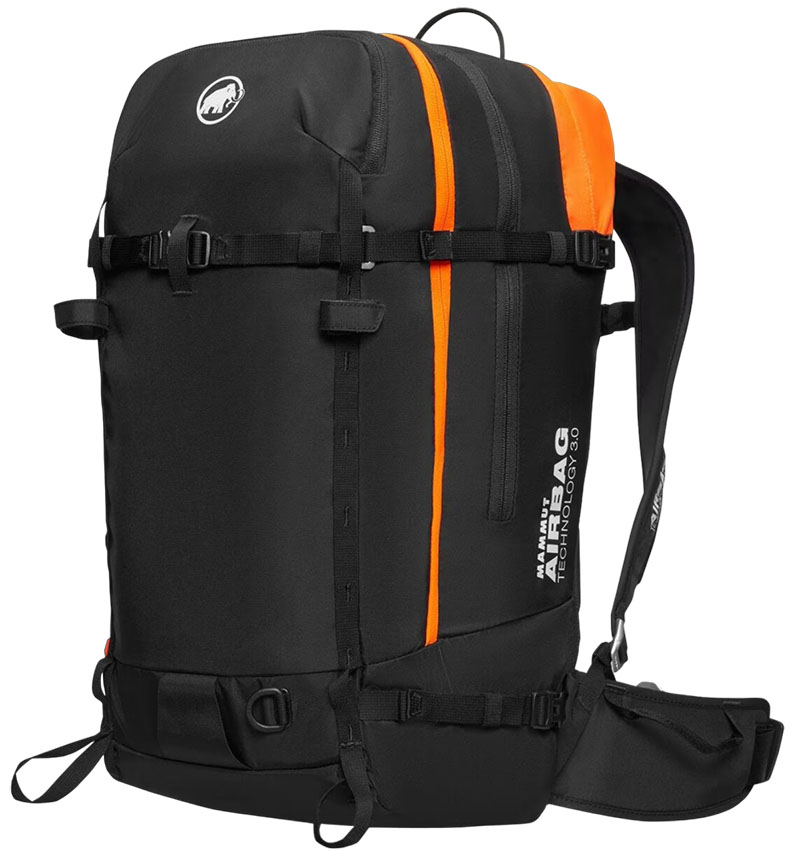
8. Mammut Pro 35 Removable Airbag 3.0 ($780)
 Category: Airbag
Capacities: 35, 45L
Weight: 5 lb. 12.6 oz.
What we like: An airbag pack for significantly less than the BD JetForce Pro above.
What we don’t: Electric systems are a bit more user-friendly; price of bag does not include air canister.
Electric fan airbags (like the Black Diamond JetForce Pro above) are the wave of the future, but you can save a lot of money with a canister-powered design. Mammut’s Pro 35 Removable Airbag 3.0 is an undisputed leader in this category for its mix of performance, capacity, and features. The 35-liter size is versatile for anything from day tours to extended trips, a full rear zip makes it easy to access gear, and the internal aluminum frame does a great job distributing the weight of a heavy load. But the main event here is the Removable Airbag System 3.0, a ubiquitous unit that is compatible with various packs from brands like Jones, Dakine, Highmark, and more. It all adds up to a great two-in-one deal: You get a high-quality ski pack and a versatile airbag unit that can easily be removed or used elsewhere, all for $1,005 ($780 for the airbag and pack, plus $225 for the air canister).
But as we touched on above, there are a fair number of downsides to canister designs. Namely, canisters are difficult to travel with, require refilling after each use, and can only be deployed once per fill. But many will appreciate the simple mechanical system that doesn’t use complex wiring or technology, and at 5 pounds 12.6 ounces (this spec includes the 1.5-lb. canister), the Pro 35 is noticeably lighter than the JetForce Pro above (and about $500 cheaper). All in all, if you’re set on a canister airbag, Mammut’s time-tested Removable Airbag collection is a great place to land, and you won’t be disappointed with the Pro’s organization and comfort. Note: There’s no identical women’s model, but the Tour 30 Removable Airbag 3.0 is largely similar, minus the backpanel access.
See the Mammut Pro 35 Removable Airbag 3.0
External Storage and Anchor Points Galore
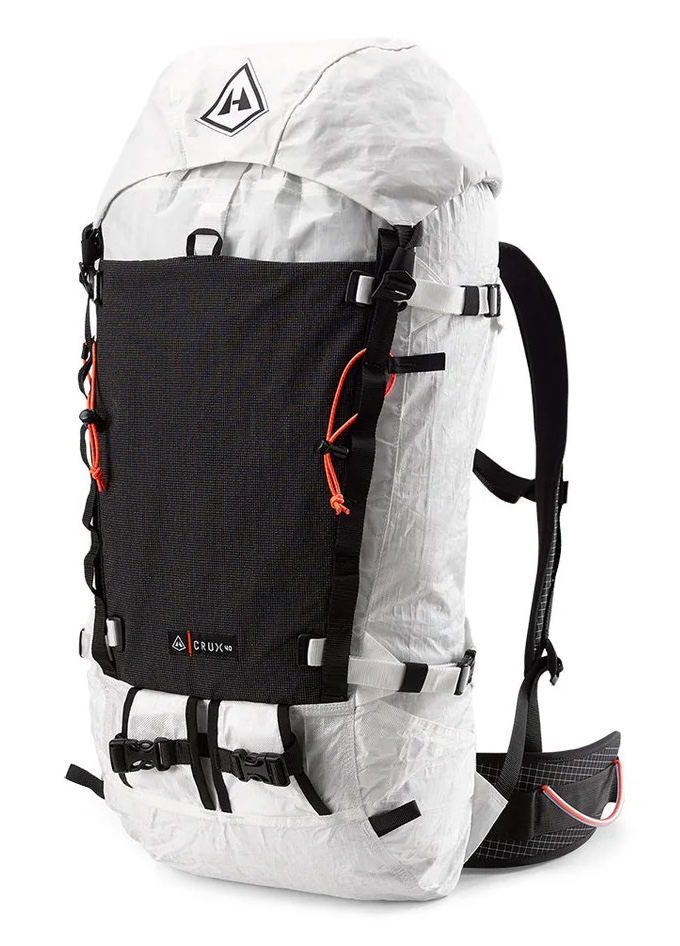
9. Hyperlite Mountain Gear Crux 40 ($499)
 Category: Ski mountaineering
Capacities: 40 + 15L
Weight: 2 lb. 12.1 oz.
What we like: Thoughtful, lightweight design with durable material where it matters.
What we don’t: Narrow and tall pack design, even on smaller frame sizes; optional add-ons are actually critical.
The brainchild of Cody Townsend, the Crux 40 from Hyperlite Mountain Gear is an undoubtedly well-thought-out and tested ski mountaineering pack. This pack was designed to ski steep terrain, and the features prove it: front and rear haul/anchor points, drawstring extension collar with removable lid, a zippered back panel entry, front stretch mesh pocket for quick storage, and the ability to both A-frame and diagonal carry skis. Unlike other Hyperlite packs, the Crux does a good job balancing the 100D Gridstop with Dyneema and 210D nylon, so there is more durable material where it’s needed, but weight is saved where those burly materials aren’t needed. We tested this pack skiing in Patagonia over the summer of 2024 and were impressed with its durability even on adventurous (e.g., culeou, or dense bamboo bushwhacking) approaches.
What are the drawbacks? As usual for Hyperlite’s products, you’re going to pay a premium to get a premium product; at $499, the Crux is almost double the BD Cirque above. Additionally, the additional 15-liter brain you can attach provides good storage, but the hooks used to secure it to the pack were less than trustworthy if they weren’t kept under tension. And while many of the Switchback editors are long-time users of HMG products, we found the Crux to be a bit narrower and taller than other designs, even those in a small frame size. This made for an awkward fit on both a 5’2″ and 6’2″ tester. We also found that the diagonal ski carry needs not just a ski strap but an additional fabric loop to attach to the bottom corner of the pack to work, making the Crux not as ready out of the box as we’d hoped for the price tag. That said, with some customization, we really appreciated this pack’s performance while rappelling, downclimbing, and skiing on steep slopes. All in all, the Crux 40 makes a reliable and well-performing bag in big glaciated terrain, and we’d recommend it if it’s in your budget—just be sure to take some time to customize your add-ons.
Read more: Hyperlite Mountain Gear Crux 40 review
See the Hyperlite Mountain Gear Crux 40
A Quality Mid-Sized Pack That’s Comfortable Across Genders
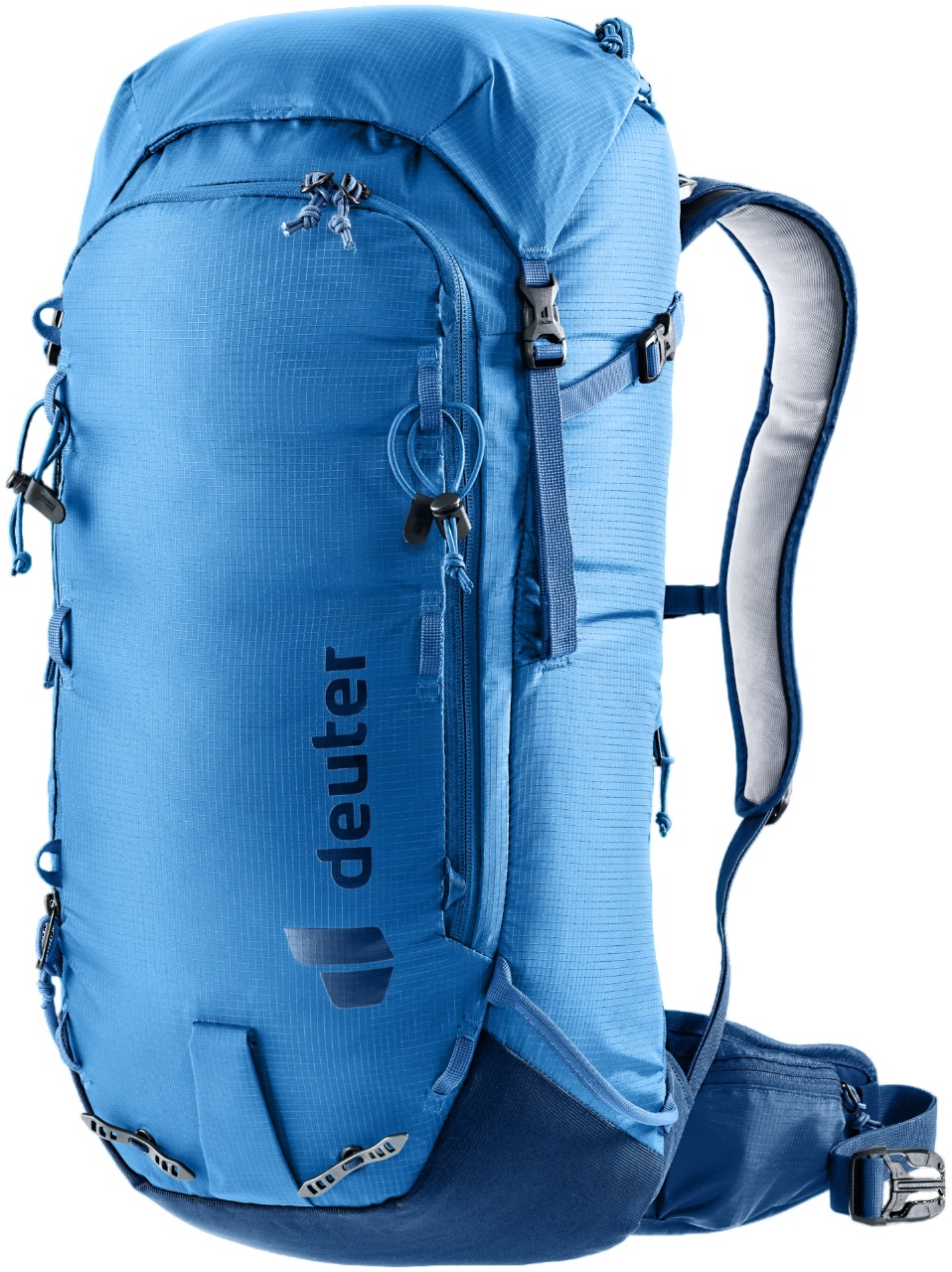
10. Deuter Freescape Lite 26 ($200)
 Category: Day touring
Capacities: 24 SL, 26L
Weight: 2 lb. 8.6 oz.
What we like: A durable and comfortable pack for day tours; we especially love the women’s model.
What we don’t: We have some gripes with the finishing details.
Germany-based Deuter is well known for their hiking and backpacking designs, but their Freescape series of ski packs shouldn’t be overlooked. The Freescape Lite 26 and women’s-specific 24 SL stand out for their impressive balance of weight, comfort, and functionality. These packs have all the storage you need for technical day tours—including an easy-to-access avalanche tool compartment, deployable helmet carry, and ice tool attachments—all in a sub-2-pound package. Our female ski testers especially like the women’s-specific “SL” (slim line) fit: The Freescape Lite 24 SL can accommodate torsos between 15 and 19 inches and also features narrower shoulder straps with soft edges and a cone-shaped hipbelt to better conform to women’s bodies.
No pack is without fault, however, and we have a few gripes with the finishing details of the Freescape models. First, the hip pockets are especially small, and we weren’t able to fit more than a few snacks and some lip balm inside (though Dueter makes up for this with a zippered side pocket purpose-built for iPhone storage). The lower A-frame strap is void of a buckle or tightening mechanism, which has made for some unwieldy ski carries in the past, especially when the pack isn’t full. It’s worth noting that the Freescape series comes in larger Pro 40+ and 38+ SL models better-suited for mountaineering objectives—the larger versions also have a few extra features like zippered back access, brain storage, and a gear loop on the hip belt. As a last note, we’ll praise the top-notch build quality of the Freescape, which, in our opinion, makes this pack well worth the $200 price tag.
See the Men’s Deuter Freescape Lite 26 See the Women’s Deuter Freescape Lite 24 SL
A Max-Volume Ski Mountaineering Pack
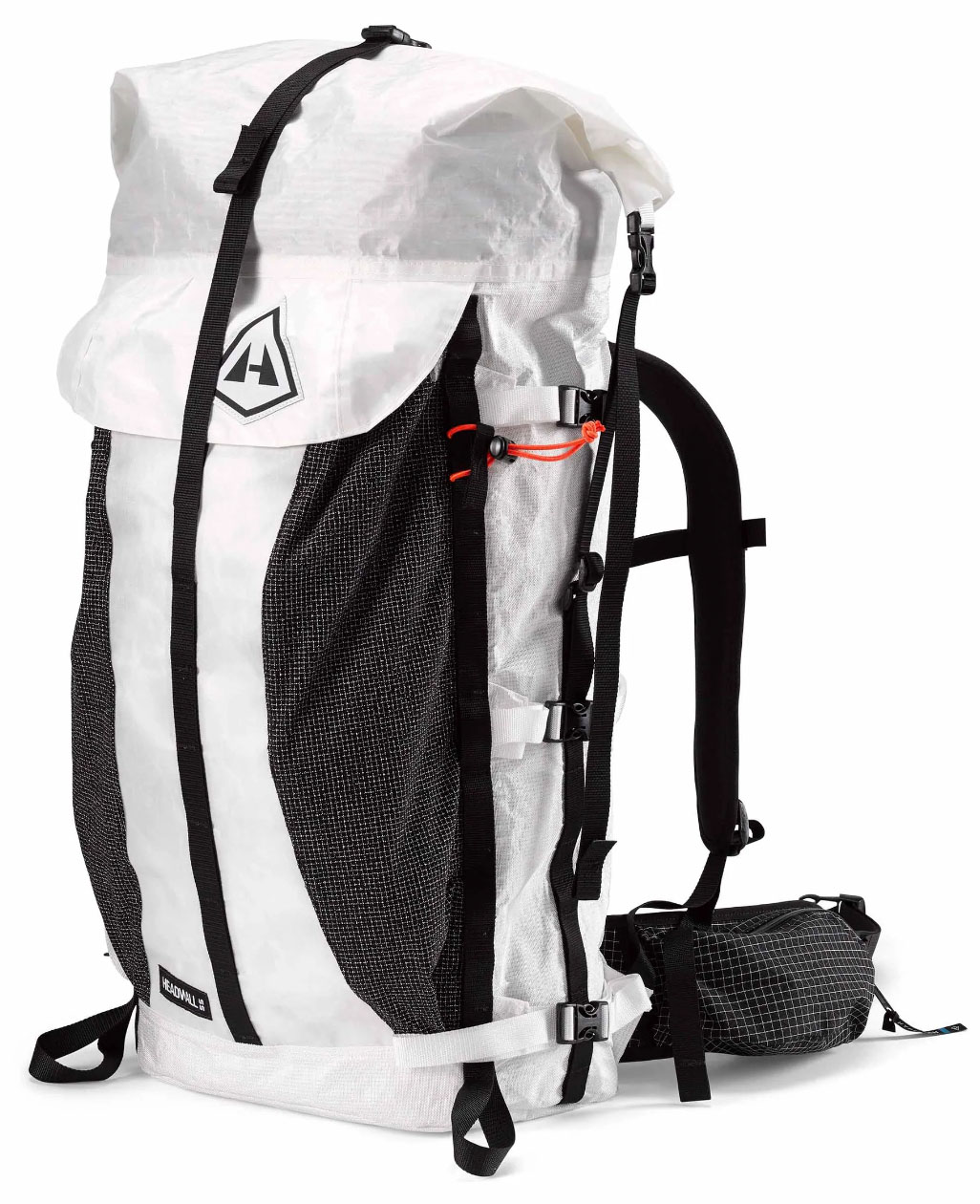
11. Hyperlite Mountain Gear Headwall 55 ($449)
 Category: Ski mountaineering
Capacity: 55L
Weight: 2 lb. 9.7 oz.
What we like: Dyneema construction is highly durable, waterproof, and lightweight.
What we don’t: Expensive and not great for day touring.
If you’re looking for a durable, waterproof ultralight backpack for ski mountaineering missions, the Hyperlite Headwall 55 should be on your radar. The Headwall is made with Dyneema, which is known for its class-leading strength-to-weight ratio in addition to being highly water-resistant. What’s more, Hyperlite designed the pack with a roll-top closure (for even greater waterproofing) and no external zippers, meaning there are very few breakable parts that can malfunction in the field. And in addition to the cavernous main compartment (55L makes it the largest option on our list), the Headwall features a generously sized internal zip pocket, stretchy front pouch for avy gear (and more), and hipbelt pockets that are large enough to accommodate a large smartphone and snacks.
We put a lot of use into the Headwall throughout a season, and overall, we really like the design for overnight or gear-heavy ski missions. That said, it’s not the ideal pack for day touring—there’s a lot of fabric at the top you’ll need to roll down to compress a less-than-full load, and it’s not the most convenient pack for transition-heavy yo-yo laps (unlike the BD Cirque above, the Headwall does not feature a side zipper). And while we’ve found it fairly comfortable to carry, this pack is very tall and skinny when loaded down, and the lack of load lifters at the top of the shoulder straps means the pack can feel a little wobbly. For a smaller and more manageable option, the Hyperlite Crux 40 above tacks on zippered backpanel access and a detachable lid for $50 more. But minor gripes aside, the Headwall is a cut above the rest in terms of technical prowess. If you’re willing to fork over the $449, it’s a wonderful option for serious ski mountaineers.
Read more: Hyperlite Mountain Gear Headwall 55 review
See the Hyperlite Mountain Gear Headwall 55
A Resort-Friendly Backpack With a Large Water Pouch Included
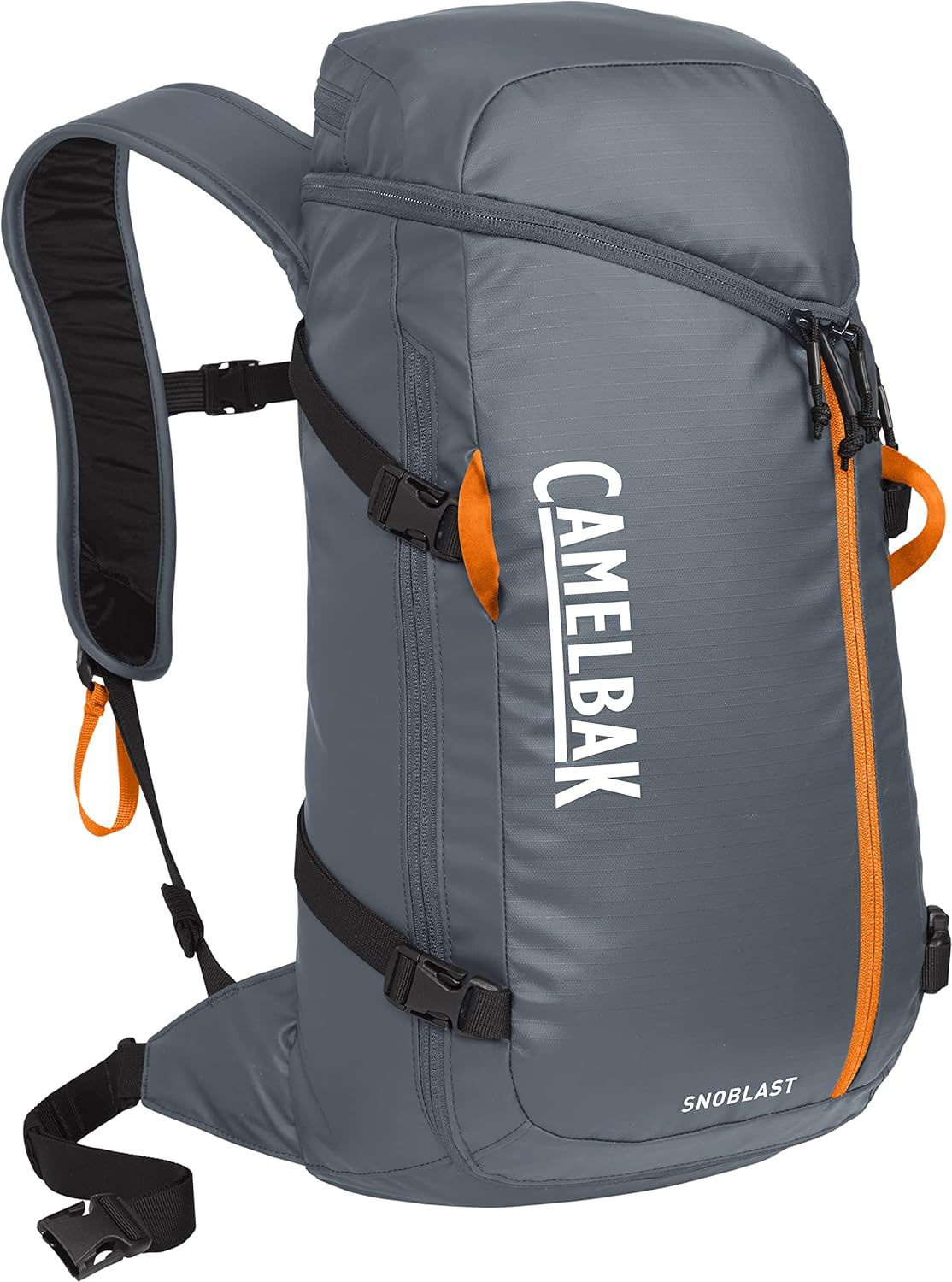
12. CamelBak SnoBlast 22 Hydration Pack ($132)
 Category: Resort
Capacity: 22L
Weight: 2 lb. 4 oz.
What we like: A medium-sized resort pack with a quality CamelBak reservoir.
What we don’t: Those who carry just the essentials will likely want a smaller pack; a couple of fit and finish issues.
CamelBak is known for their quality hydration systems, so it comes as little surprise that they make a great hydration-equipped ski pack. In this case, the resort-ready SnoBlast includes their 2-liter Crux reservoir that’s easy to remove, fill, and stuff into the bladder sleeve. CamelBak also tackles the issue of frozen hoses head-on by providing the option to zip the bladder hose into an insulated sleeve on the shoulder strap (this also keeps it from flapping around on rowdy descents). The rest of the organizational layout is equally well executed, including a three-zipper design that allows you to open the pack from the top or down the side, compression straps for expanding or cinching the front panel, and A-frame ski carry for short jaunts into the sidecountry (it can also accommodate a snowboard).
The SnoBlast 22 marked CamelBak’s foray into the ski pack market, and it proved to be a solid first effort. In addition to the quality reservoir and well-sorted storage layout outlined above, this bag is competitively light at just 2 pounds 4 ounces but still durable enough to handle the rigors of resort use. That said, in our experience, smaller designs like the Glade Verte 18 above are ample for most inbounds riders, although it will cost you $28 more for less capacity. And we have a couple of design-related nitpicks about the SnoBlast: While it’s easy to loosen the pack and pull it onto your lap on the chairlift, it’s tricky to retighten the straps once you reach the top (especially while wearing gloves), and the helmet attachment loops provide a loose (read: bouncy) carry. But for resort riders looking for integrated hydration at a good price, the SnoBlast is a great option to consider.
See the CamelBak SnoBlast 22 Hydration Pack
Tested and Dismissed
The list above represents the ski backpacks we believe best balance price and performance, but it doesn’t include everything we’ve had the opportunity to test. In the hope of providing more transparency about the work we do behind the scenes, here are some of the packs we’ve recently tested but ultimately decided not to include in our main lineup.
Raide Research is a young company that is still refining some aspects of their designs. While we appreciate elements of the LF 30L, such as the backpanel access and removable frame, recent updates to the avalanche gear carry compartment have us scratching our heads about how much the updates actually improved the functionality of the pack. This model is also downright expensive.
The Ortovox Ravine 34 is a nice piece of equipment that serious mountaineers will appreciate, and it is exceptionally light for its size. However, while we like the addition of dedicated features such as easily accessible crampon storage and external attachments for rope, helmets, and ice axes, these may get in the way of simplicity if you aren’t going to bring those things. The featherweight design also sacrifices a few functions, such as backpanel access.
We appreciate that the Osprey Soelden 32 and Women’s Osprey Sopris 30 check so many of the boxes for a good day of touring. They fit well, they’re comfortable, and they allow for tons of organization. But they also don’t quite stand out in any particular way, and we have a gripe: you have to undo the compression straps to access the avy tool compartment, which adds a step when you really don’t have a second to spare.
The Dakine Poacher RAS 36L has a few attractive features, such as insane durability and the ability to add a Mammut Removable Airbag System. Unfortunately, this pack is really spendy for what it is, and it is nearly double the weight of other bags we’ve tested in similar volumes.

Ski Backpack Comparison Table
| Ski Backpack | Price | Category | Capacities | Weight | Access |
|---|---|---|---|---|---|
| Black Diamond Dawn Patrol 32 | $220 | Day touring | 15, 25, 32L | 2 lb. 10.3 oz. | Backpanel, top |
| Dakine Heli Pro 20L | $144 | Resort/day touring | 20, 24L | 1 lb. 14.2 oz. | Backpanel, top |
| Gregory Verte 18 | $160 | Resort/day touring | 12, 18L | 2 lb. 2.2 oz. | Top, side |
| Black Diamond JetForce Pro 25 | $1,500 | Airbag | 10, 25, 35L | 6 lb. 7 oz. | Top |
| Ortovox Haute Route 30 S | $210 | Day touring | 30, 38L | 2 lb. 14.6 oz. | Backpanel, top |
| Black Diamond Cirque 50 | $280 | Ski mountaineering | 25, 35, 50L | 3 lb. 0.3 oz. | Top, side |
| Patagonia Descensionist 37L | $279 | Mountaineering/touring | 37L | 3 lb. 4 oz. | Top, side |
| Mammut Pro 35 Removable Airbag | $780 | Airbag | 35, 45L | 5 lb. 12.6 oz. | Backpanel, top |
| Hyperlite Crux 40 | $499 | Ski mountaineering | 40 +15L | 2 lb. 12.1 oz. | Backpanel, top |
| Deuter Freescape Lite 26 | $200 | Day touring | 24 SL, 26L | 2 lb. 8.6 oz. | Top, side |
| Hyperlite Headwall 55 | $449 | Ski mountaineering | 55L | 2 lb. 9.7 oz. | Top |
| CamelBak SnoBlast 22 | $132 | Resort | 22L | 2 lb. 4 oz. | Top, side |
*Editor’s note: Prices and weights include batteries or canisters where applicable.
About Our Testing Process
For most of us at Switchback Travel, winter is synonymous with ski season. Whether we’re lapping groomers at our local ski resort or waking up before the sun for a big-mountain objective, we’re constantly reaching for a ski pack to carry the essentials. Editors Maddie Downie and Brooke Maushund have been spearheading this guide since 2024. Maddie is a fan of type 2 touring adventures that involve more time with skis on her back than on her feet, and she continues to help hone this list based on her extensive backcountry experience in the North Cascades. Brooke sees the mountains as a canvas and enjoys skiing most when it’s combined with climbing and efficiently covering long distances to paint a beautiful adventure across ridgelines and down couloirs. She continues to seek the best pack to suit every flavor of ski adventure while avalanche forecasting, ski guiding, and going on long walks in the Eastern Sierra and Patagonia.
Joining them in 2025, our snowsports editor, Ross Patton, is beyond familiar with ski backpacks: he’s been wearing them since he was a child. Aside from countless backcountry days in the fluffy white stuff, Ross has also toted about any type of backpack you can imagine on his global adventures, from avalanche airbags and camera bags in the winter to backpacking backpacks, hydration bags, and backpack coolers in the summer. From Kilimanjaro to moto-packing in Southern Utah, the guy is very used to having two straps on his shoulders.
Our current lineup of 12 snow-ready packs has been curated through hands-on testing as well as research and feedback from our readers and the online ski and snowboard communities. When testing ski packs, we first look at fit and comfort by loading them up with all our typical gear, including layers, food and water, and avalanche tools if we’re heading into the backcountry. Capacity, organization, and weight are also critical considerations and will largely depend on your intended use: Resort riders can get away with more streamlined designs, while ski mountaineers embarking on multi-day missions into the mountains will almost certainly want added capacity for shuttling full loads and divvying up equipment, while ideally keeping weight to a minimum. Last but not least, the smaller details can really make or break a pack, so we make sure to evaluate all features for functionality and ease of use. As new and noteworthy designs hit the market, we’ll continue testing and updating the list above to reflect our current favorites.
Ski Backpack Buying Advice
Ski Backpack Categories
Skiing can take a variety of forms, from lift-served turns to quick dawn patrol laps before work, traveling the week-long Haute Route in the Alps, or seeking out powder stashes deep in the backcountry. Given the variety and the notable differences in pack designs for each use, we’ve broken our picks into four separate categories: resort, day touring, ski mountaineering, and airbag backpacks.
Resort
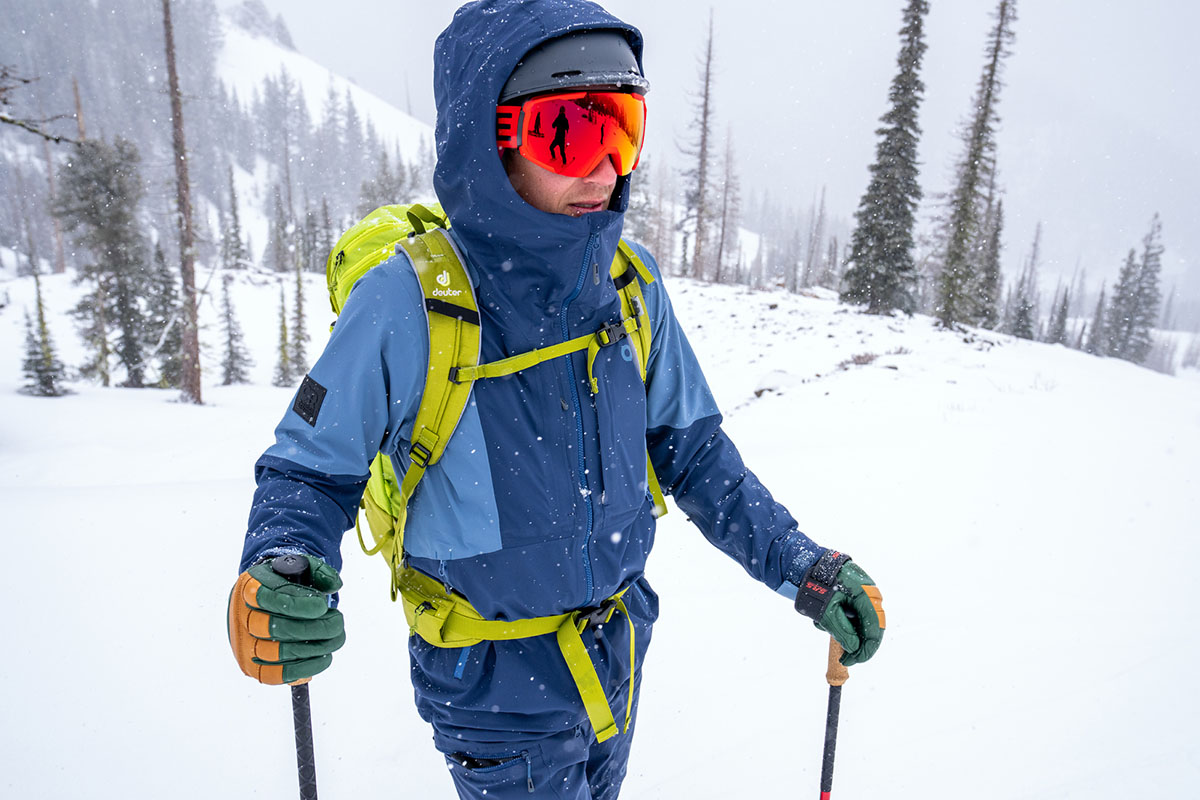
A resort pack is the ideal choice for in-bounds riding, sidecountry terrain, and even snowcat or heli-accessed skiing. The main distinguishing factor here is capacity—packs in this category are around 5 to 22 liters in size, which is perfect for carrying your water and snacks, an extra layer, and avalanche gear (if needed, like when heli-skiing). For lift-accessed terrain, you’ll also want to look for a clean exterior with minimal straps to avoid snagging the chairlift when loading/unloading, but might still want a ski carry option for hiking inbounds. Most of these packs feature an insulated sleeve for storing a water reservoir, which is great for staying hydrated without removing your pack. Some of our favorite designs in this category include the Gregory Verte 18 and CamelBak SnoBlast 22, and it’s also worth checking out smaller-capacity versions of many of the other packs above.
Day Touring
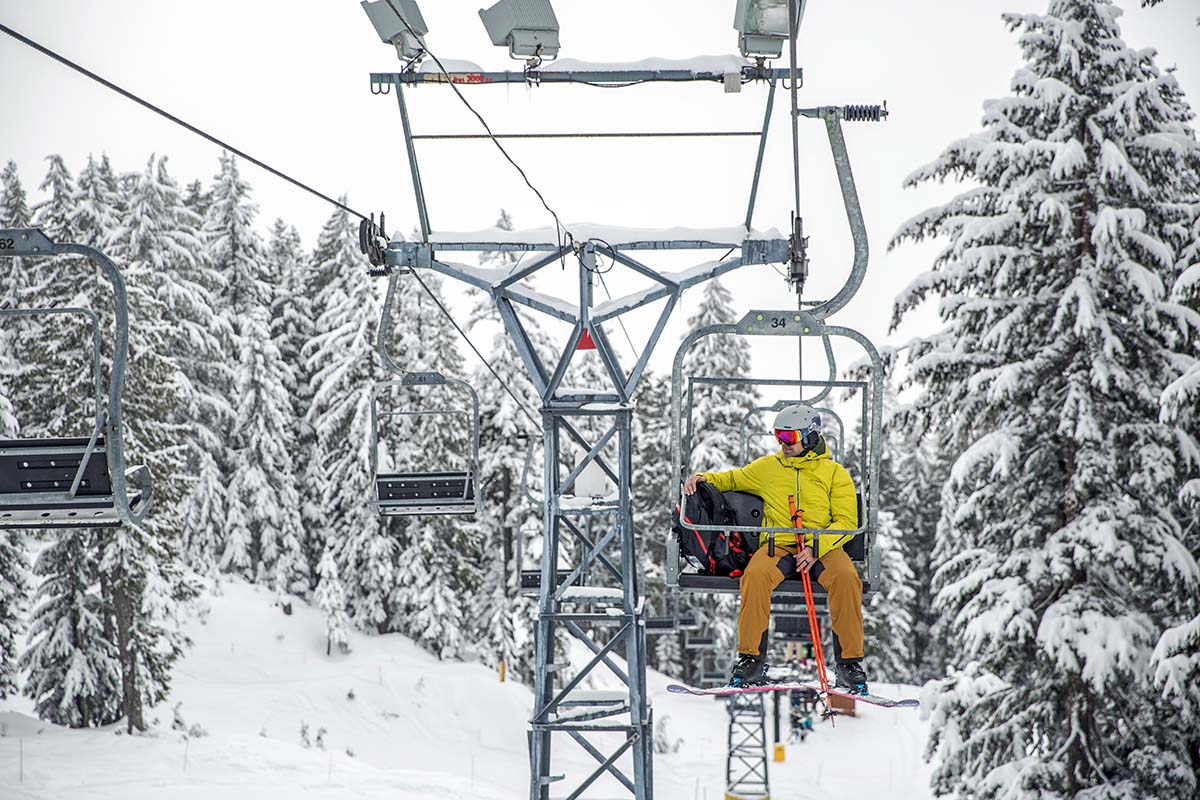
Packs in our day touring category are a great fit for close-to-home backcountry tours. When you’re earning your turns, you’ll be transitioning a lot from uphill skinning to downhill skiing, so a good day-touring pack will prioritize organization with features like full backpanel access to the main compartment, external accessory pockets, and a dedicated snow goggle pocket. They also place a high priority on comfort (over the weight-savings of ski mountaineering designs), with robust backpanels and nicely padded hipbelt and shoulder straps. Most backcountry skiers and riders will appreciate a pack in the 25- to 35-liter range, which is a just-right capacity for accommodating your food and water, extra layers, avalanche tools, helmet (on the uphill), and skins (but usually not quite enough for overnight gear or technical equipment like a rope and harness).
Ski Mountaineering
Ski mountaineering—not to be confused with skimo racing—is a discipline of skiing that involves venturing into more technical terrain that requires some mountaineering skills to navigate. Ski mountaineers might encounter glaciers, ice, steep snow, and even dry trail along their route, and missions can often be multiple days long. To account for the added gear and technicality, ski mountaineering packs offer a bump in performance in more streamlined packages to shave crucial weight. Look for dedicated ice tool attachments, a helmet-carry system, external straps for a ski or snowboard carry, lighter-weight fabrics, and supportive suspension systems. Ski mountaineering packs will often range from 35-45 liters to accommodate technical or overnight gear. Our favorite packs in this category are the Black Diamond Cirque, Ortovox Ravine 34, and extra-large Hyperlite Headwall 55, which do a great job balancing weight and comfort.
.jpg)
Airbag
One of the dangers of an avalanche is that it can pull you deep under the snow, making rescue a physical and time-consuming process. To help increase chances of survival, airbag packs include a bag that inflates to about 150 liters, giving skiers a better chance to stay close to the surface rather than being sucked under (this is governed by the process of granular segregation, which states that larger objects will stay on top of a mixture while smaller objects will sink to the bottom). Additionally, airbags can help provide a protective cushion around the head and neck to attempt to help guard against obstacles like rocks and trees. By nature, these packs are heavier, more expensive, and have limited capacities, but they’re still common in heli-skiing, cat-skiing, lift-served backcountry skiing, for professional avalanche workers, or day-touring applications. Additionally, some designs allow you to remove the airbag mechanism completely, which gives you the versatility of traveling with or without the extra load.
.jpg)
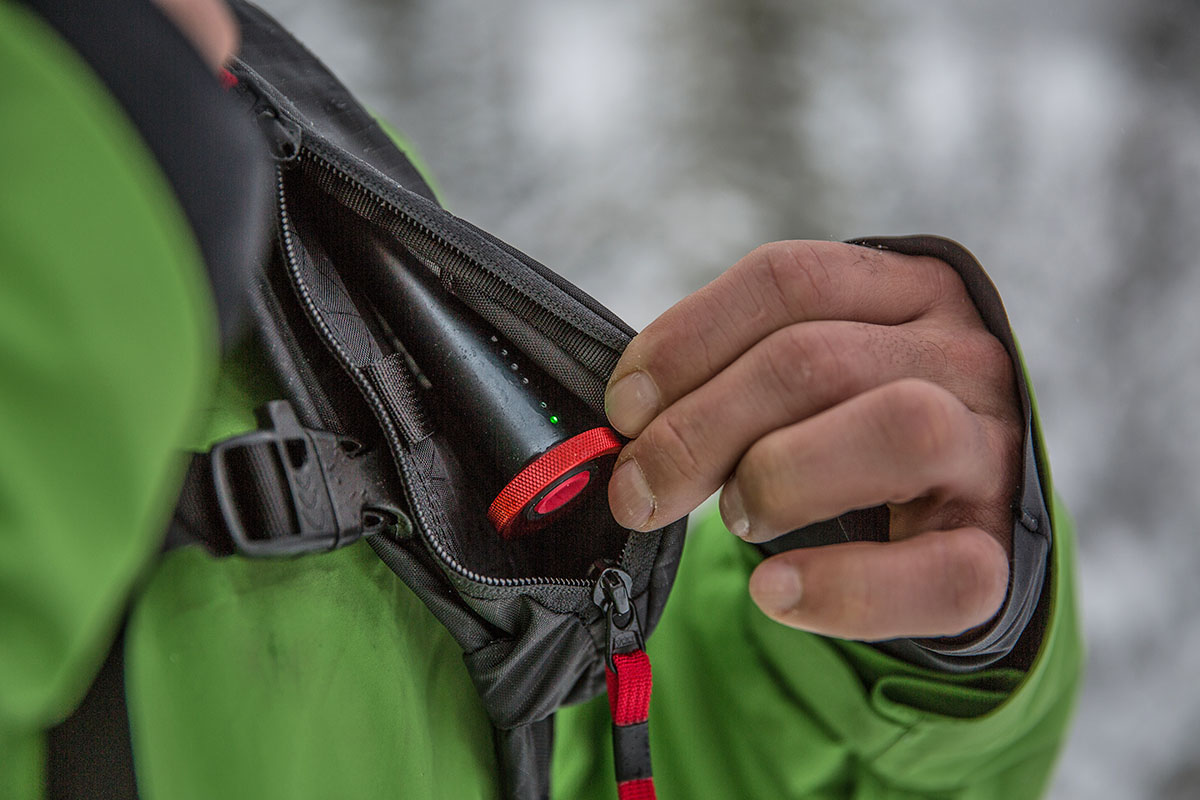
There are currently two types of mechanisms used to inflate airbags: compressed air and electric fans. When a canister is triggered, it shoots air (or gas) into the bag, inflating it in about three seconds (depending on the system). Powered by batteries or supercapacitors, fans are also activated with a pull cord and take around the same time to inflate. Where do the two differ? First and foremost, while canister airbags are generally lighter and less expensive off the shelf than electric systems, they can only be deployed once. After this you’ll need to acquire a full canister, which can get time-consuming and costly. Fans, on the other hand, can often be used multiple times on a single charge (like Black Diamond’s JetForce Pro) and are easily recharged. This allows skiers to practice without the hassle and cost of expending canisters (if you don’t live near a refill location, you’ll have to mail the cartridge in for replacement). Finally, fan-powered airbags can be taken on airplanes with relative ease, while canister models are trickier and require you to empty the air beforehand (compressed gas canisters cannot be taken on a plane at all). For a closer look at the market, see our article on the best avalanche airbag packs.
Ski Backpack Capacity
Ski backpacks come in a range of sizes, from compact 20-liter packs for out-of-bounds skiing close to the resort or heli-accessed skiing to large 40- to 50-liter packs for overnight trips and technical ski mountaineering. In-bounds resort-goers leaving the rescue gear behind can likely get away with an even smaller pack like the Gregory Verte 12. But in our experience, the sweet spot for most backcountry skiers is in the 30- to 40-liter range, which is where the majority of the picks above fall. These are perfect for skiers who enjoy long days popping in and out of bounds at the resort or day tour backcountry outings, and they provide ample space and organization for avalanche gear, extra layers, skins, food, and water. We also feature a few packs in slightly larger sizes for overnight trips or exceptionally frigid days when you want to carry along your bulky puffy jacket and thermos of tea. However, keep in mind that the larger your pack’s capacity (and the more you load inside), the more cumbersome it will feel on the downhill.
.jpg)
Weight
Ski backpacks range from lightweight 2-pound models to heavy airbag-equipped bags like the Black Diamond JetForce Pro, which clocks in at 6.5 pounds. For those focused on moving quickly on the skin track or who don’t want to be weighed down on the descent, a lightweight pack—along with lightweight gear both inside and underfoot—should be a top priority. If you want added carrying comfort or an airbag system, expect a big bump in weight. Finally, you should keep in mind that a pack’s weight is generally correlated with its level of supportiveness: The lighter the pack, the less padding and suspension it offers.
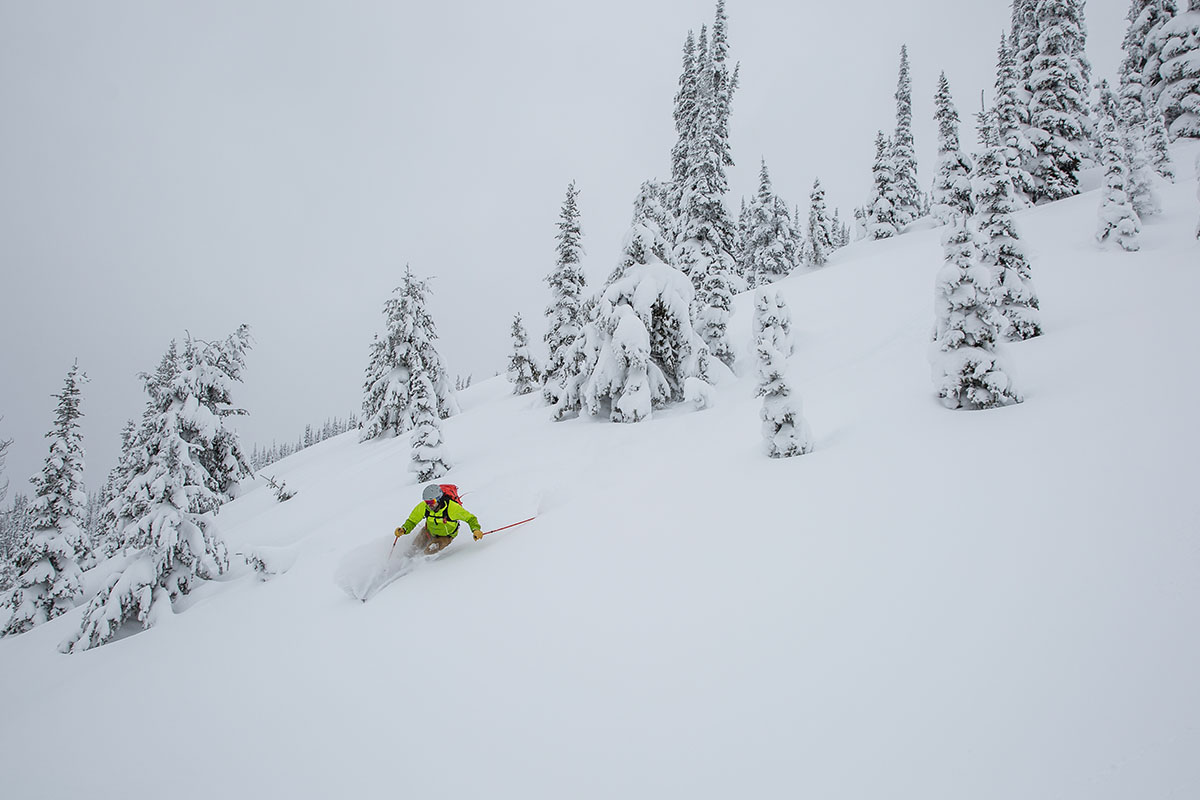
Ski Backpack Durability
In general, ski backpacks are a durable breed, built to hold up to seasons of use (and abuse). How your pack will fare over time is a combination of a few things: the fabric thickness, the makeup of other materials (including buckles, foam, and zippers), and the quality of construction. Fabric thickness is expressed in terms of denier, with higher numbers denoting burlier fabrics. The packs on our list range from about 210-denier to 420-denier. If you anticipate getting a lot of use out of your pack, it’s worth opting for a design with thicker fabric, although do keep in mind this comes with a weight penalty. There are lightweight and durable materials, like the Raide LF 30L’s Challenge Ultra 400TX, but these come with a higher price tag. Some packs, such as the Gregory Verte 18, utilize both: the pack body is 210D, but the pack bottom is constructed with burlier 420D, which allows it to remain light while still maintaining durability where it counts.
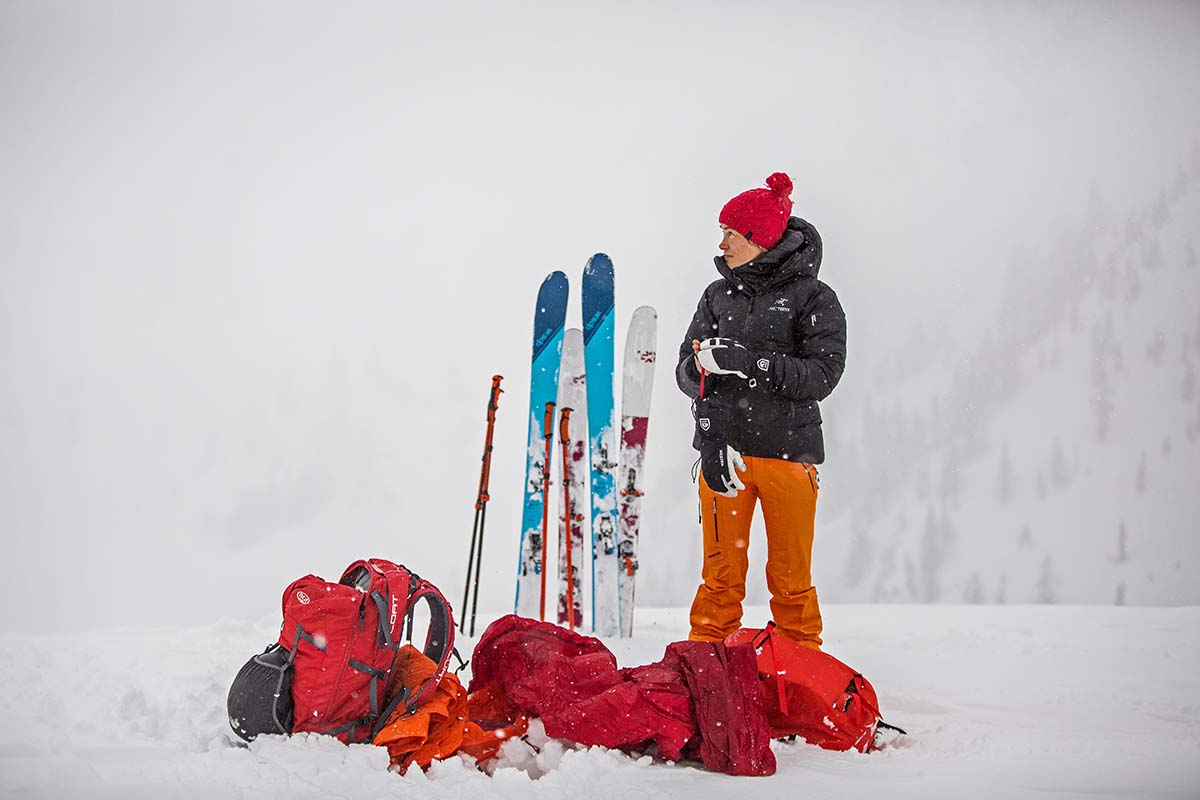
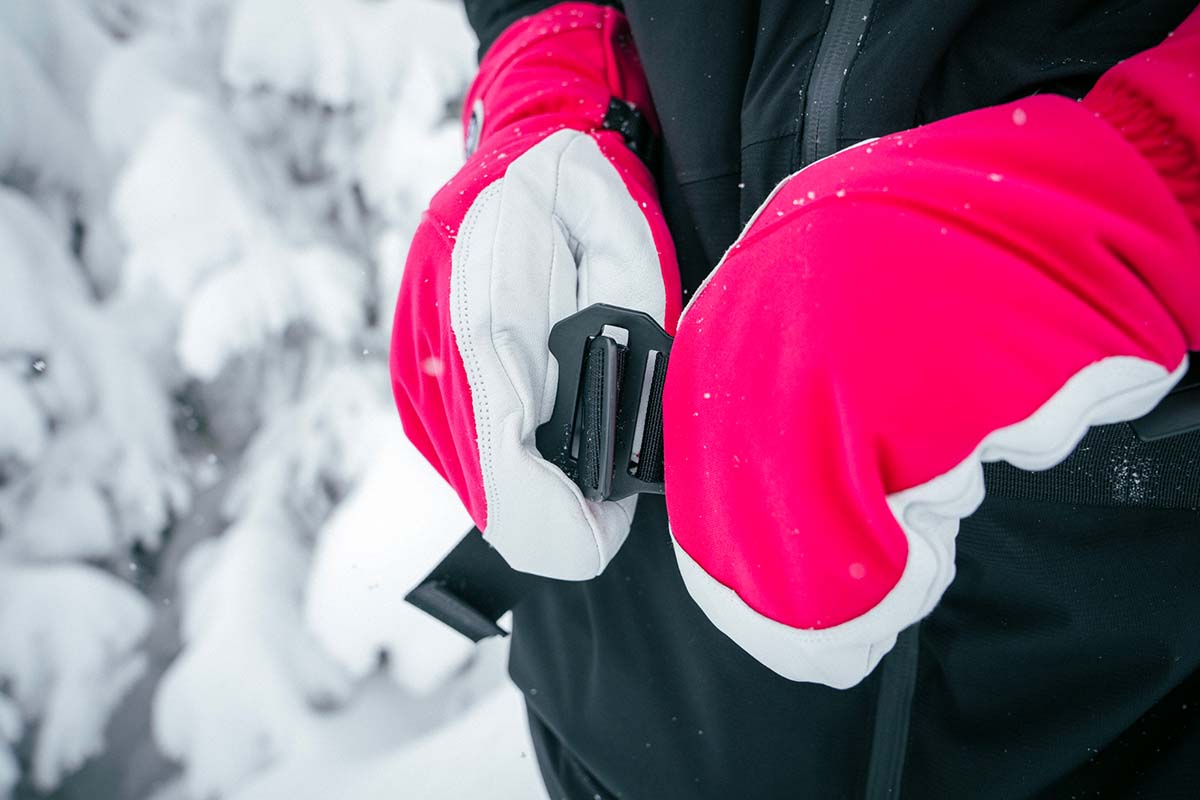
In terms of other materials, look for packs with thick zippers, wide webbing, and metal (rather than plastic) components. For example, the Black Diamond Dawn Patrol features a metal hipbelt buckle, which is a bit more finicky than a plastic buckle, but will last throughout the lifespan of the pack. It’s also worth noting that metal and plastic frames stay stiff over time, while foam has a tendency to degrade and lose its structure. Finally, brand and price point can be a helpful guide in finding a long-lasting pack: Companies like Patagonia, Ortovox, Osprey, and Deuter are known for quality, while budget offerings may only last a season of consistent use.
Carrying Comfort
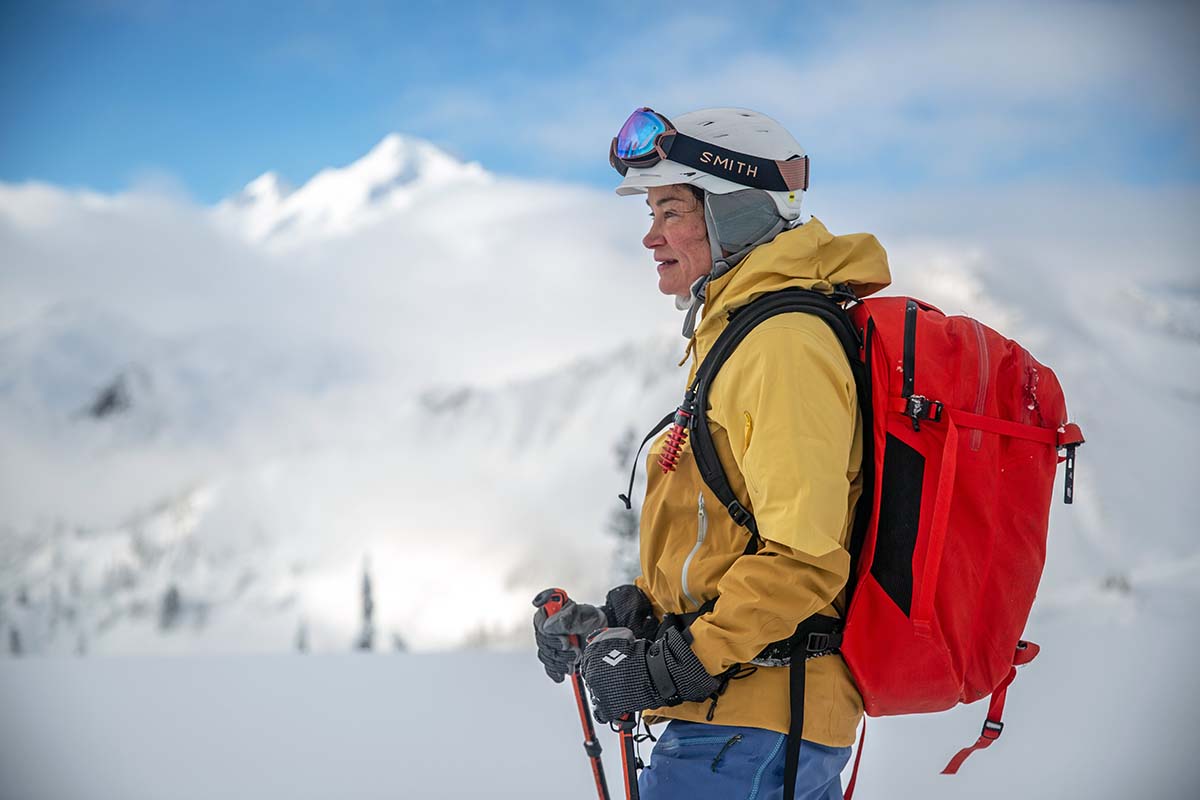
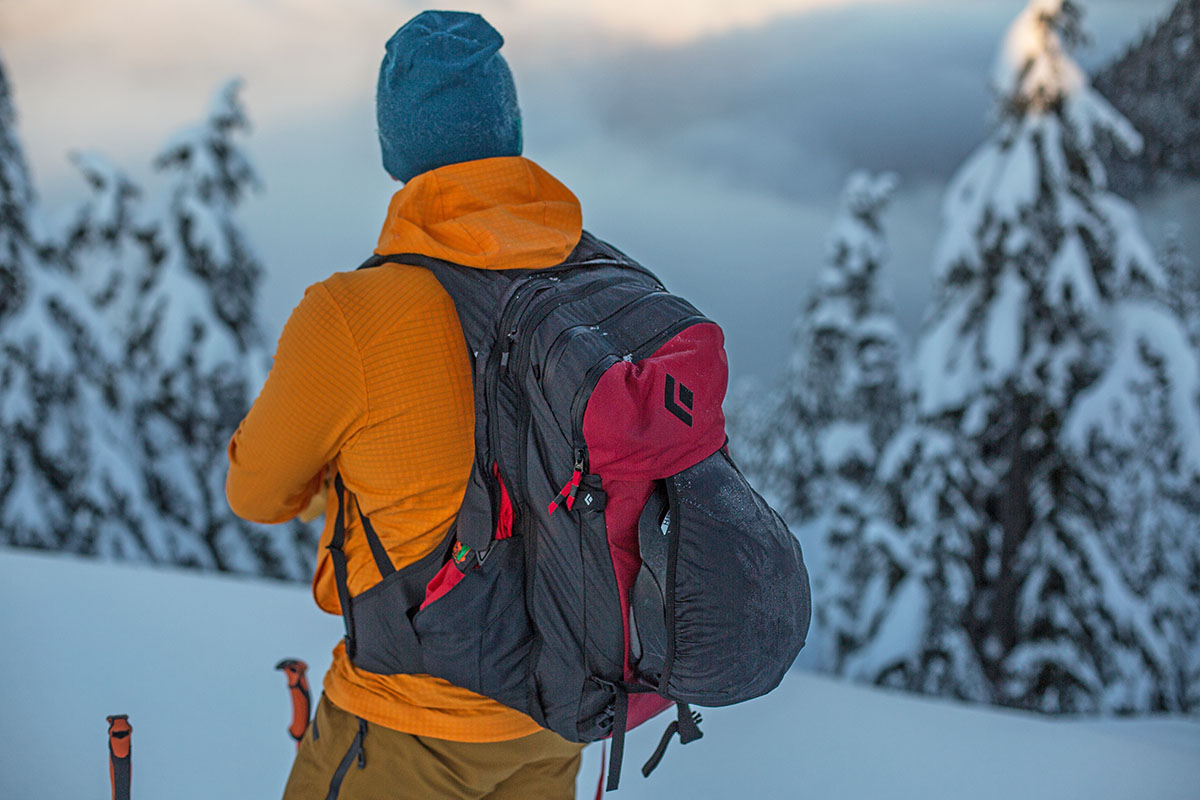
Many factors contribute to a pack’s overall comfort, including the shape and size, beefiness of the suspension, and the amount of adjustment the pack offers. For those who prioritize freedom of movement on the downhill, a pack that is streamlined and sits close to the back (look for smaller capacity, minimalist suspension, and compression straps) will perform better than a pack with a bulky suspension system that separates the load from the body. On the other hand, when weighed down with 40+ liters of gear on the skin track, you’ll be thankful to have a robust backpanel (packs like the Ortovox Haute Route even incorporate an internal wire frame, which offers a lot of extra support for hauling heavy loads), shoulder straps, hipbelt, and features like load lifters that allow you to dial in the fit.
.jpg)
In the end, it’s important to identify your priorities and understand that there will be trade-offs with any pack you choose. A good place to start: Are you more focused on the uphill or downhill? For instance, the Ortovox Haute Route is one of the most comfortable packs on our list, but some will find that its suspension is bulkier for aggressive skiing. On the other hand, many of the lightweight options we’ve tested (like the Black Diamond Cirque 50) sacrifice support to shave weight, which can make skinning and bootpacking a bit less comfortable if you’re not used to strategically packing your gear. Interestingly, most manufacturers offer larger-capacity packs with the same suspension as their smaller counterparts, so don’t necessarily expect to find increased support as you size up. The Gregory Verte 18 is exceptionally comfortable to wear, and the designers of the pack incorporated an innovative element that our team loves: the waistband is stretchy. Whether you’re lapping the chairlift or breaking the skin trail, with the amount of twisting and contorting involved with skiing, an elasticized belt substantially reduces strain on your waist.
Closure Systems and Access
One way that ski packs stand out from standard hiking daypacks or climbing packs is in their access to the main compartment. Most ski packs feature multiple access points—usually a combination of a top drawstring or zipper paired with a side zip or a back/front panel zip. Because skiing tends to be very transition-heavy and you’re in and out of your pack a great deal, multiple access points allow you to get at gear in every nook and cranny without needing to take anything out.
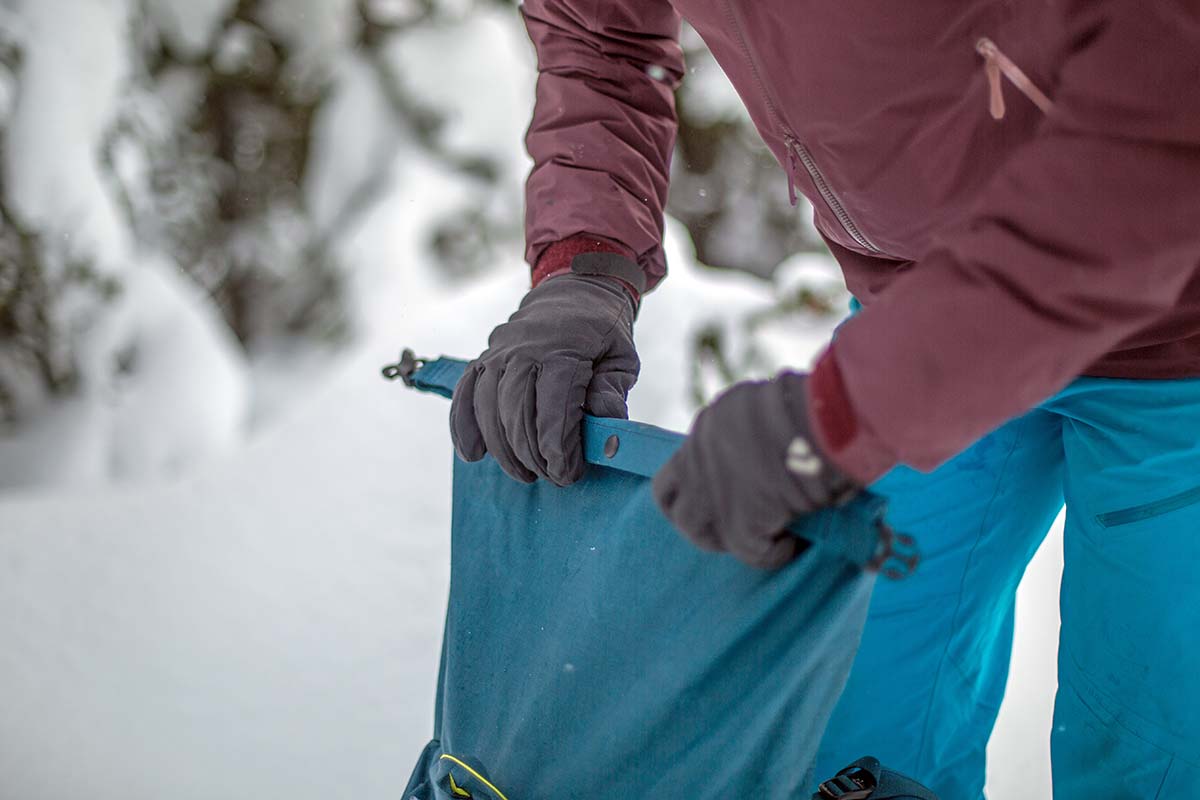
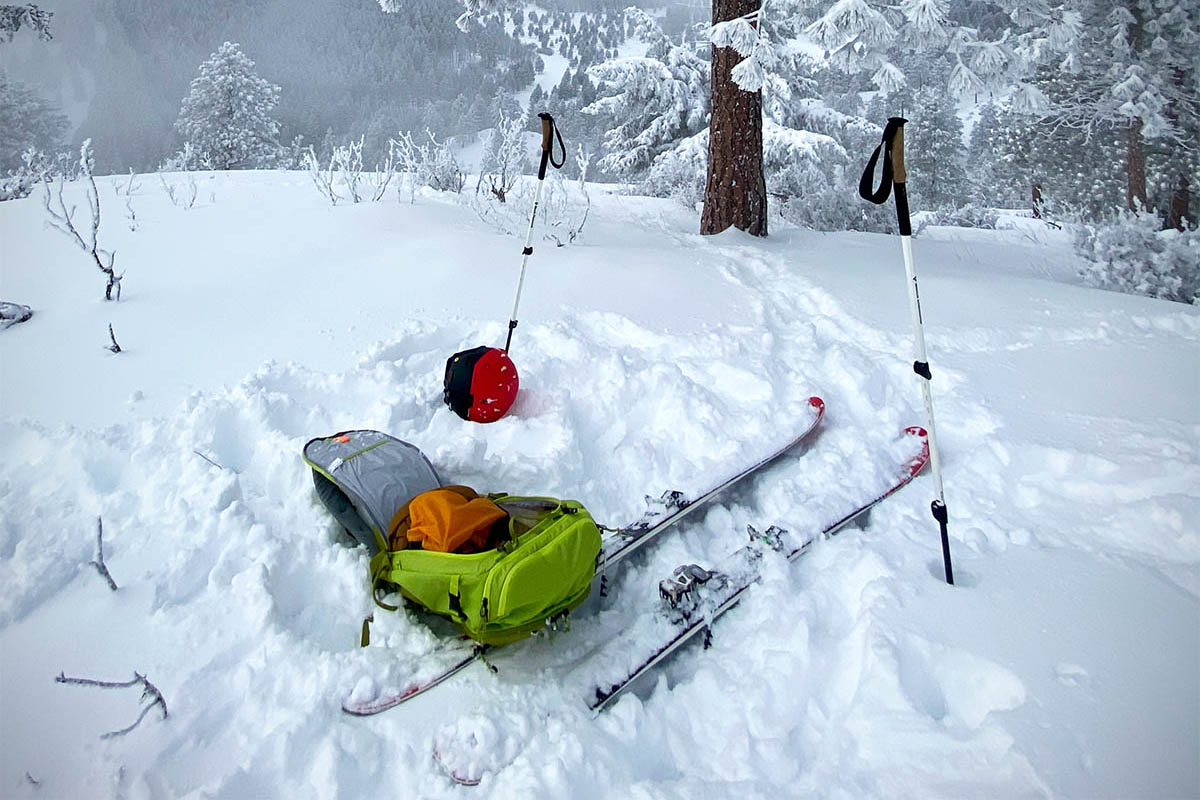
When deciding on a pack, think about how often you’ll need to access gear throughout the day and in what sort of environments. For those who want to open their pack on the chairlift, a top zip is great for getting at snacks, water, or a goggle wipe. Alternatively, when skiing laps in our local backcountry, we prefer a pack with a U-shaped backpanel zip (like that of the Black Diamond Dawn Patrol 32) that allows us to see all our gear and use our pack as an ad hoc staging area during transitions. Ski mountaineers who have longer approaches and descents (and are thus transitioning less) can get away with a more streamlined opening (the Hyperlite Headwall 55 has a roll-top closure that opens up to huge capacity).
Organizational Features
Avalanche Gear Compartment
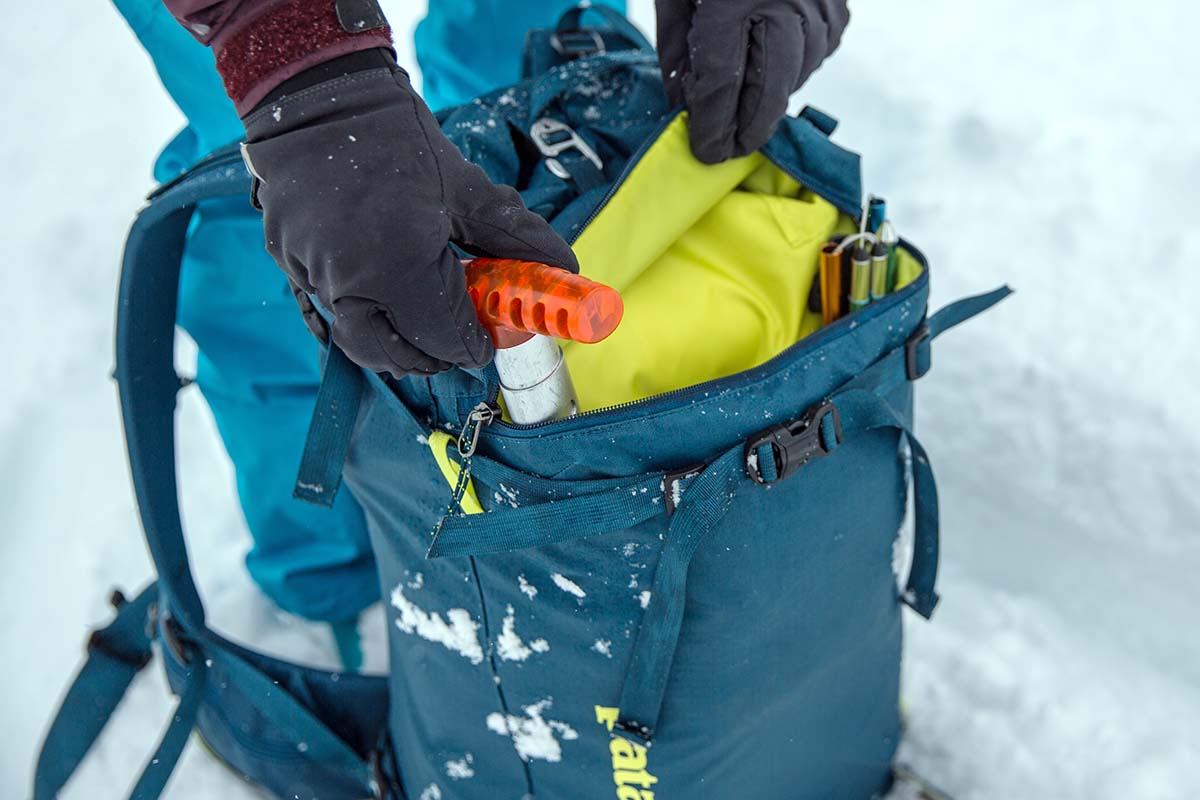
Many new skiers will use a hydration pack, climbing pack, or hiking daypack for in-bounds days or ski touring. However, it is essential for your safety and that of your ski partners that those venturing into the backcountry purchase a ski-specific pack. The vast majority of ski backpacks have a dedicated avalanche gear compartment, allowing for quick access to your shovel and probe in the event of an avalanche. Some, like the Deuter Freescape Lite 26, feature a dedicated zip pocket, while others, like the Black Diamond Cirque 50, have a pouch in the main compartment. No matter the design, the goal is to make your rescue equipment easily accessible. When purchasing a pack, make sure the compartment is large enough to fit your gear and that it’s easy to access regardless of what you might strap onto the outside.
Accessory Pockets
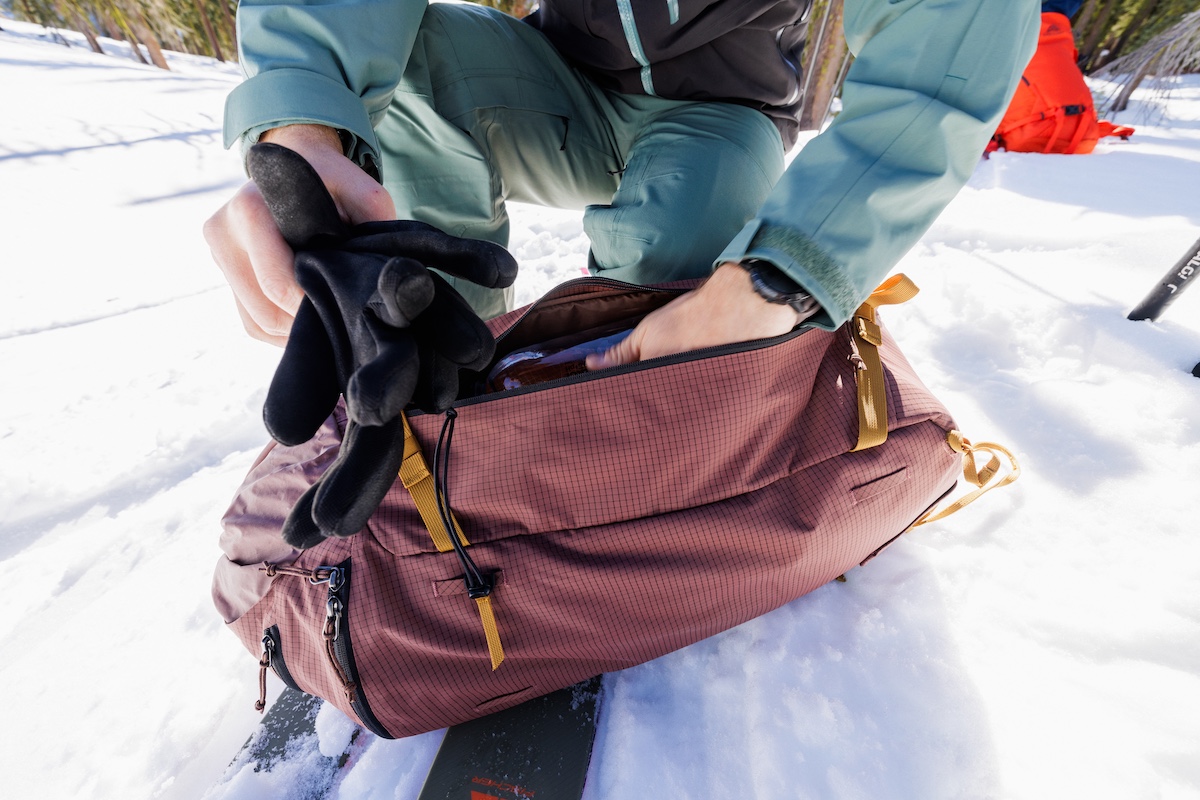
Most ski backpacks feature at least one pocket in addition to the main compartment and avalanche gear compartment. We find this extra pocket extremely useful for smaller items such as goggles, sunglasses, lip balm, a knife, and snacks. Often, this pocket is also fleece-lined to protect your ski goggles, which is a nice touch. Sometimes, it’s located on the inside rather than the outside of a pack, which streamlines the exterior but is less convenient to access.
.jpg)
Compression Straps
Your pack’s load will likely change throughout a day of skiing as you swap layers and transition. To account for this, most ski packs are designed with compression straps along the sides that allow you to snug down a partially full load so that it rides close to your back and doesn’t feel unwieldy. These straps are also especially helpful for streamlining larger-capacity bags. For example, the Deuter Freescape SL 38+ is a good option for overnight trips, but thanks to its roll-top and compression straps, it can be tightened down to serve as a comfortable day-touring bag.
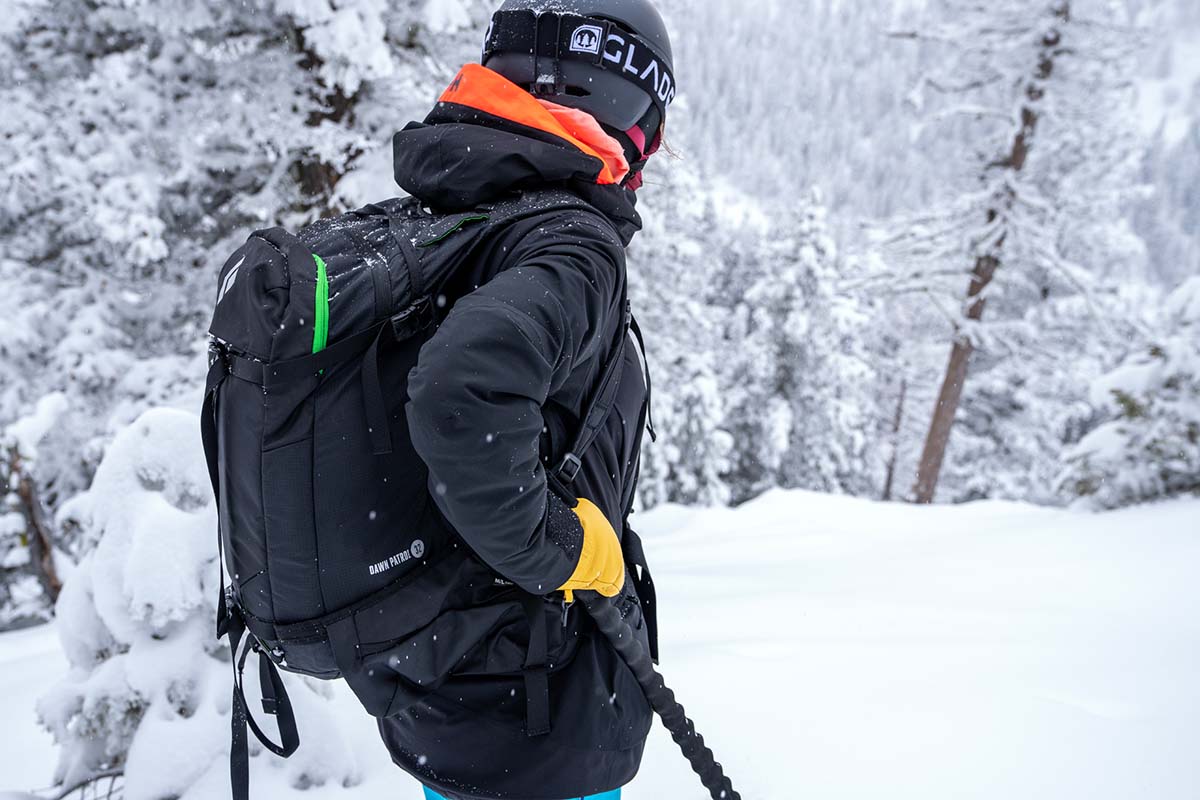
All that said, packs with compression straps or other external straps generally aren’t ideal for resort skiers, as they’re more likely to get caught on the chairlift. Instead, look for packs with clean exteriors and minimal outer features. Further, you should always exercise caution while getting off a lift with a pack. The best method is to sling it over one shoulder rather than both, and make sure you’ve undone both the waist belt and sternum strap before unloading. CamelBak’s SnoBlast 22 makes this easy with a harness that’s quick and simple to loosen for slinging the bag over your lap, although the straps are a bit difficult to re-cinch when wearing gloves.
External Attachment Points
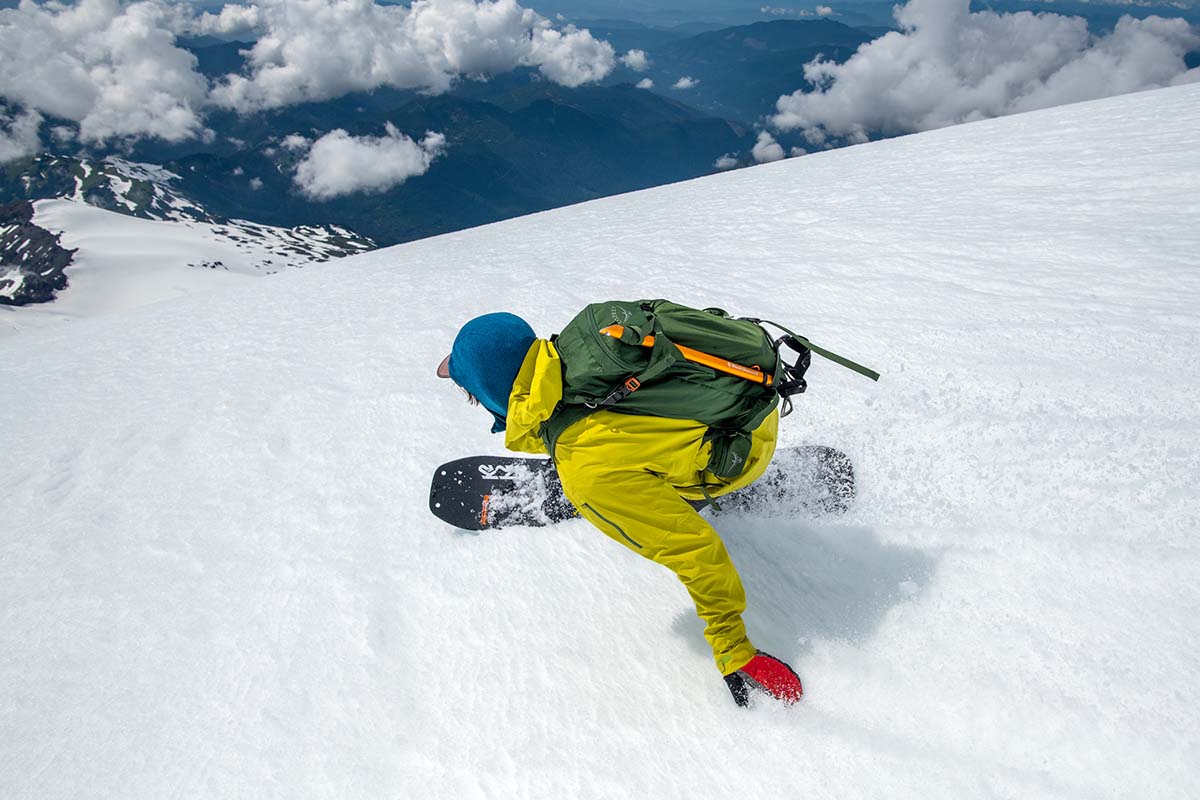
Many ski packs—and especially those tailored to ski mountaineering—are made with various external attachment points, designed specifically for convenient storage of ice tools, crampons, rope, and a ski helmet. Before making a purchase, it’s important to consider whether or not you really need these features—if you don’t, they might feel unnecessary and burdensome. And it’s worth noting that standard packs generally feature some variety of compression straps or ski-carry straps, which can be used to carry gear externally in a pinch. That said, ski mountaineers will appreciate the convenience of dedicated slots and systems for their ice tools, helmets, and ropes, like those found on the Hyperlite Crux 40.
Ski and Snowboard Carry
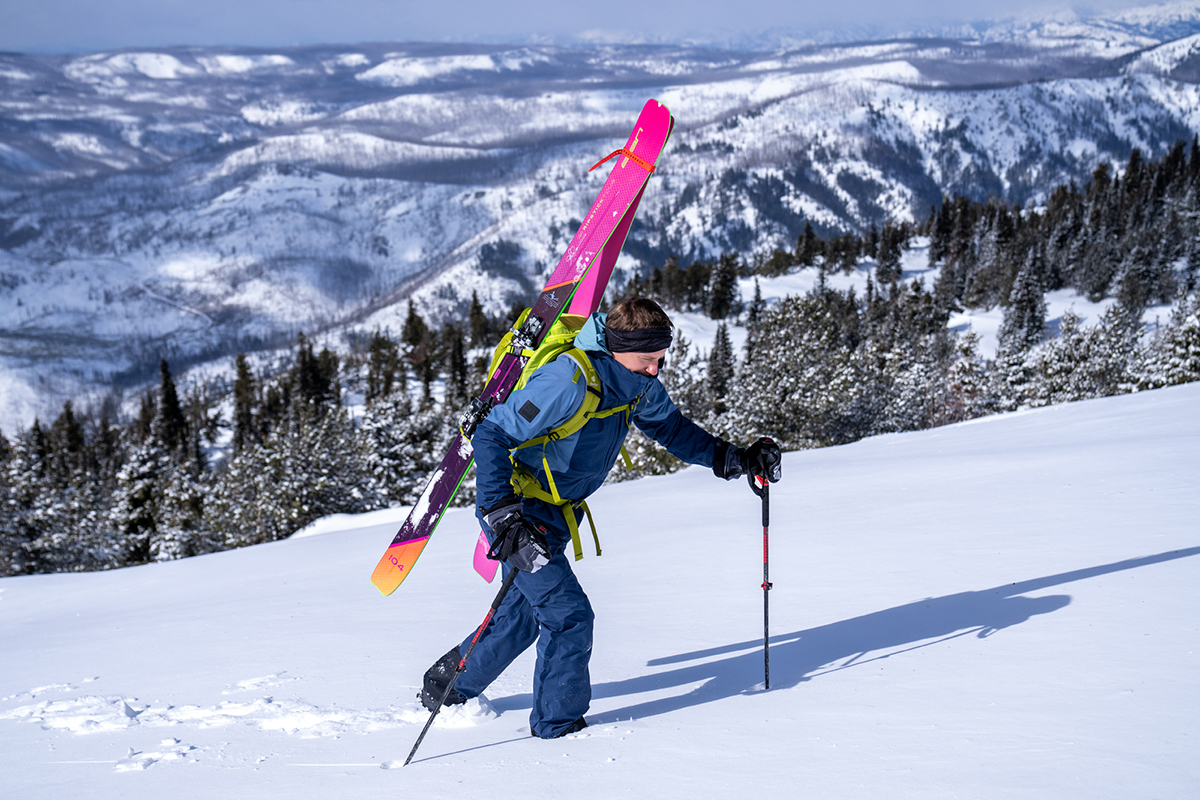
All of the packs in this article are designed with external straps for attaching skis (or often a snowboard) to the outside. These straps are incredibly useful in the event that you need to hike with your skis on your back, which is common in ski mountaineering and accessing hike-to terrain at resorts. In terms of design, some packs allow you to attach lightweight skis in both diagonal and A-frame configurations, while others limit you to one setup or the other (many airbag-equipped packs, for example, do not support A-frame carry). Further, it’s not rare to find a pack that is unable to haul a snowboard (the Black Diamond Cirque, for example).
Women’s-Specific Ski Backpacks
Most of the ski packs listed above are either unisex or men’s-specific designs, but some manufacturers make a women’s version as well (or, in the case of Ortovox, an “S” version for shorter torsos, regardless of gender). In addition to different colorway options, most women’s packs feature shorter torso lengths to better accommodate smaller builds. Unfortunately, this often results in a drop in capacity compared to the men’s counterpart, although the difference is typically just a couple of liters. Many women’s packs also have narrower shoulder straps and curved hipbelts to provide a more contoured fit.
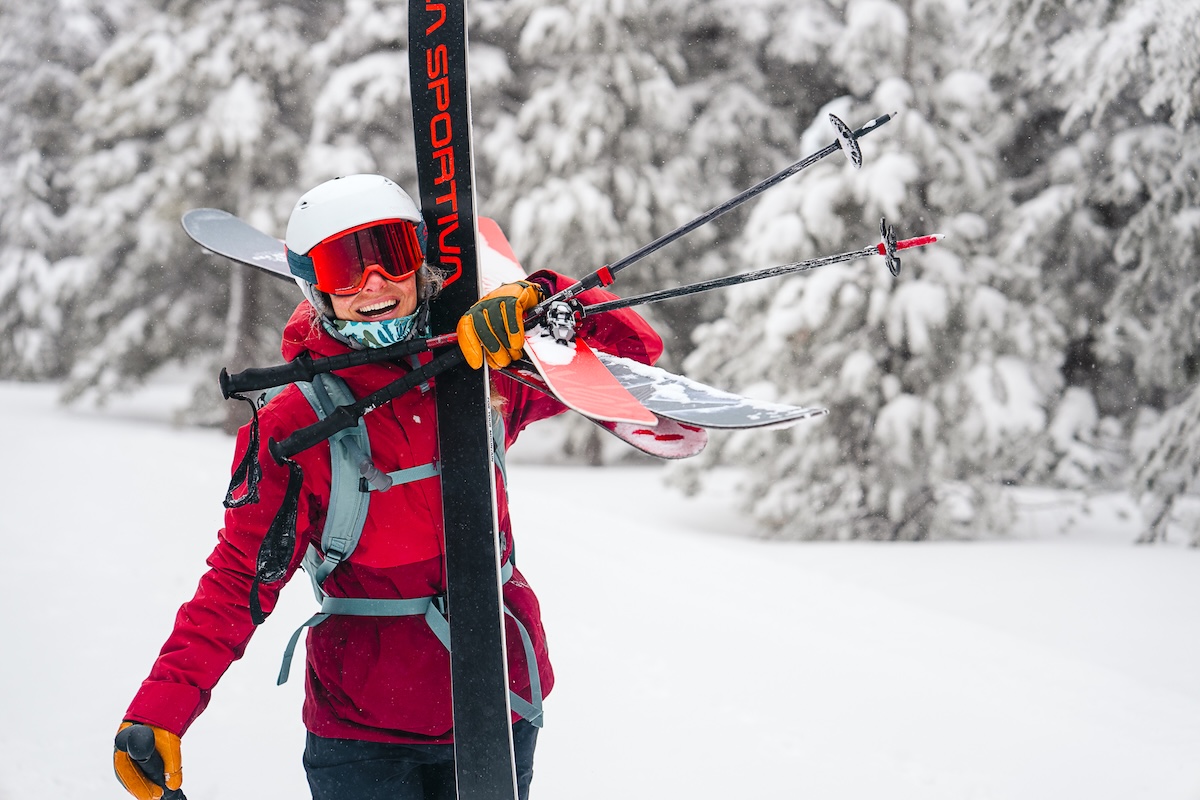
Deuter is one brand that has impressed us with their women’s-specific designs, including the Freescape Lite 24 SL (short for “Slim Line”). As mentioned above, Ortovox also offers a short version of many of their packs, which are indicated with an “S” after the product name, while Osprey offers women’s models with entirely different names than the men’s counterparts (the Soelden and women’s Sopris, for example). In the end, many women will be able to make a unisex or men’s pack work, but if you find yourself struggling with fit and comfort on the slopes, consider opting for a women’s-specific design from one of these brands.
Back to Our Top Ski Backpack Picks Back to Our Ski Backpack Comparison Table
link